Let's keep this practical.
Value isn't about the lowest sticker price. It's about what that SUV costs you over the years you actually own it. A $35,000 vehicle that hemorrhages resale value and eats tires every 25,000 miles can cost you more than a $39,000 one that holds its worth and runs trouble-free past 100,000 miles.
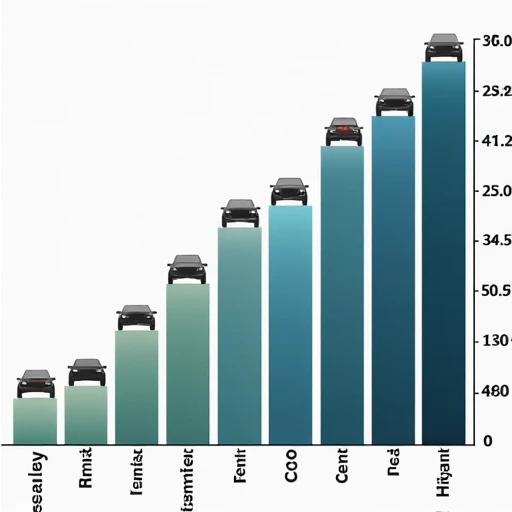
I've ranked these seven family SUVs using five-year cost-to-own projections, resale value retention data, predicted reliability scores, and real-world maintenance patterns. Every vehicle on this list comes in under $40,000 in a well-equipped trim that families actually buy—not the stripped base model that exists only on paper. No six-figure luxury barges. No "technically under 40 if you skip air conditioning" nonsense. Just vehicles that earn their keep.
How I Calculated Long-Term Value
The window sticker is only the first number in a much longer equation. For this ranking, I weighted four factors equally:
Five-year depreciation is the biggest expense most buyers ignore. A vehicle that retains 55% of its value after five years leaves thousands more in your pocket than one retaining 40%. J.D. Power and Kelley Blue Book residual value data drive this portion of the scoring.
Predicted reliability comes straight from J.D. Power's Vehicle Dependability Study and Consumer Reports reliability surveys. A lower purchase price means nothing if you're funding repairs while still making payments.
Fuel costs over five years use EPA combined fuel economy, 12,000 annual miles, and a $3.50-per-gallon baseline. The difference between 25 mpg and 35 mpg over five years is roughly $2,400—enough to fund a family vacation or two.
Maintenance and repair projections factor in known trouble spots, timing belt versus timing chain costs, CVT versus traditional automatic longevity, and turbocharger long-term considerations. Some vehicles simply cost more to keep running after 60,000 miles. This ranking penalizes that.
The Rankings: 7 Family SUVs That Deliver on Long-Term Value
1. 2026 Honda CR-V EX Hybrid — Best Overall Long-Term Value
The CR-V Hybrid lands at roughly $35,000 in the EX trim, and it's the complete package. J.D. Power gives it a predicted reliability score of 83 out of 100. Real-world owner data shows five-year depreciation at roughly 48% on the $35,250 vehicle. The naturally aspirated Atkinson-cycle hybrid system avoids turbo complexity. Honda's reputation means insurance quotes stay reasonable. If you can find one at MSRP, this is the value benchmark against which everything else should be measured.
2. 2026 Toyota RAV4 Hybrid LE — Closest Value Competitor
Starting at $29,800, the RAV4 Hybrid undercuts the CR-V on upfront price. Resale value is even stronger—projections show roughly 53.9% retained after five years, largely due to Toyota's hybrid reputation and the 10-year battery warranty. Fuel economy is the segment leader at 48 mpg city. The tradeoff is interior refinement and rear-seat room, which fall short of the Honda. Some owners report cabin noise as a long-term satisfaction issue. For pure spreadsheet logic, this is a top-tier choice.
3. 2026 Subaru Forester Premium — Best for Long-Term Ownership in Cold States
The Forester won an IntelliChoice Best Overall Value award in its segment, and the numbers back it up. Standard all-wheel drive, strong safety scores, and Subaru's loyal owner base support resale values. The naturally aspirated 2.5-liter engine and CVT have predictable maintenance patterns. Insurance costs are low. Fuel economy trails the hybrids at roughly 29 mpg combined, adding about $1,800 in fuel costs over five years compared to the CR-V Hybrid. For families in snowy climates who plan to drive past 150,000 miles, the Forester's simplicity pays off.
4. 2026 Hyundai Tucson Hybrid Blue — Strong Warranty, Strong Features
Hyundai's 10-year/100,000-mile powertrain warranty is the best in the business. Combined with 38 mpg and competitive pricing around $33,000 for the hybrid, the Tucson delivers solid value—especially for shorter ownership windows where the warranty coverage overlaps significantly with your payment period. Resale value doesn't match Toyota or Honda, but the lower upfront cost helps offset that gap. The cabin feels more premium than the price suggests.
5. 2026 Kia Sportage Hybrid LX — High Value, Lower Entry Price
Starting around $29,500, the Sportage Hybrid delivers 43 mpg and Hyundai's same warranty backing. Cargo space is generous for the segment. The main knock is resale value, which trails the Japanese brands—Kia's reputation has improved dramatically but takes time to translate to residual projections. If maximum upfront affordability plus hybrid efficiency is your priority, this deserves a serious look.
6. 2026 Mazda CX-5 2.5 S Preferred — Best Value for Non-Hybrid Buyers
The CX-5 starts under $31,000 and offers a naturally aspirated engine paired with a conventional six-speed automatic—a conservative, proven powertrain that should age predictably. The interior feels more expensive than segment norms, and Mazda's reliability track record has climbed steadily. The downside is fuel economy at 28 mpg combined and tighter rear-seat space. If you're set against hybrid complexity and want a vehicle that's pleasant to sit in for years, the CX-5 holds its own.
7. 2026 Ford Escape ST-Line Hybrid — Underrated American Value
Available around $34,500, the Escape Hybrid uses a planetary gearset hybrid system similar to Toyota's—Ford licensed the technology years ago—with 39 mpg combined. Resale value is weaker than the Japanese entries but better than the Escape's gasoline-only versions. The ST-Line trim adds sportier styling without inflating the price into luxury territory. Worth cross-shopping if local Ford dealers are discounting while Honda and Toyota lots remain tight on inventory.
The Features That Kill Value Without You Noticing
Some features inflate the purchase price while adding nothing to long-term value—and sometimes actively reduce it.
Larger wheels look great on the showroom floor but typically increase tire replacement costs by $200-400 per set and deliver a harsher ride that your kids will notice on road trips. The Forester's standard 17-inch wheels are cheaper to maintain than the 19-inch options on higher trims of competing models.
Panoramic sunroofs add weight, complexity, and potential leak paths after 60,000 miles. They're expensive to repair, and families I talk to report using them far less often than expected after the first year of ownership.
Turbocharged engines deliver snappy throttle response during test drives but add long-term complexity. If you're planning to keep the vehicle past the warranty window, the naturally aspirated options on this list deserve extra consideration.
All-wheel drive is worth the cost if you face real winters or regularly drive on unpaved roads. For families in mild climates, front-wheel drive saves roughly $1,500 upfront and delivers 1-2 mpg better for the life of the vehicle. Don't pay for capability you'll genuinely never use.
Final Advice From Nathan
If you plan to keep this SUV past the warranty window, pay attention to the powertrain architecture more than the sticker price. The vehicles at the top of this list—the CR-V Hybrid, RAV4 Hybrid, and Forester—earned their positions because their engineering choices favor long-term durability, not just showroom appeal.
One more thing: $40,000 is still a lot of money. Unless your household genuinely needs the space and capability a family SUV provides, consider whether a well-kept used example of any vehicle on this list serves your family just as well for thousands less. A three-year-old off-lease CR-V with 36,000 miles has already absorbed the steepest depreciation and has years of reliable service ahead. Sometimes the smartest value move is letting someone else pay for the first three years.
On paper, any of these seven choices look responsible. In family use, the ones with simpler powertrains and smarter engineering will feel that way for years longer. Test drive accordingly.


No letters yet — pray write the first.