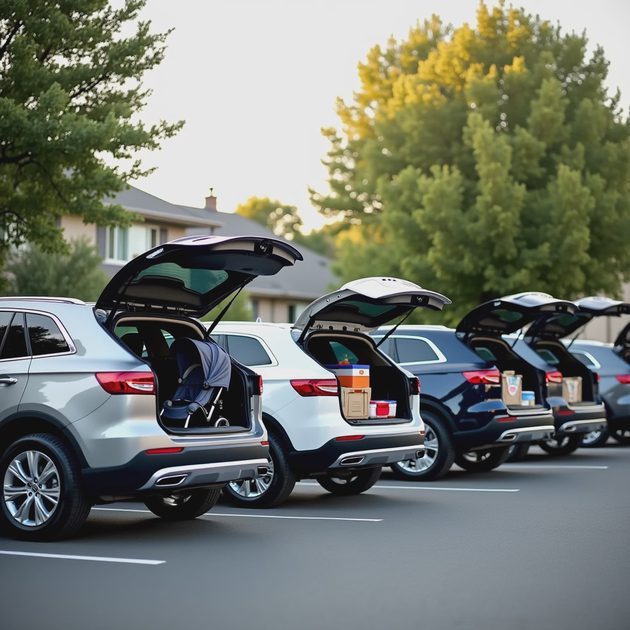
Let's keep this practical.
Not every family needs a third row. In fact, most don't. But the SUV market has become so fixated on three-row everything that two-row options can feel like an afterthought—as if you're settling for less because you didn't step up to the big one.
The truth is closer to the opposite. A well-chosen two-row SUV gives you more cargo space, better fuel economy, a lower purchase price, and less mechanical complexity than a three-row equivalent. You're not giving up capability. You're giving up two seats you'd rarely use and gaining practicality everywhere else.
This list ranks the best two-row family SUVs on the market right now, weighted for safety, reliability, cargo utility, and long-term value. Every vehicle here seats five comfortably, hauls family gear without compromise, and costs less to own over time than the three-row alternatives. If your household has two children or fewer—or your kids are old enough that carpooling doesn't define your daily schedule—these are the SUVs that make the most sense.
How I Ranked Them
This isn't a list of the newest or flashiest two-row SUVs. It's a ranking built around what actually matters when you own the vehicle for years, not just lease it for three.
Safety ratings carry the most weight. Every vehicle here earned a 2026 IIHS Top Safety Pick or Top Safety Pick+ award. For a family vehicle, this is non-negotiable. The difference between a Top Safety Pick and a Top Safety Pick+ often comes down to headlight performance and nighttime pedestrian detection—details that matter when you're driving home from a late soccer practice.
Predicted reliability comes from J.D. Power data and owner surveys. A vehicle that's always in the shop erodes its value proposition faster than depreciation does. I favored SUVs with proven powertrains—naturally aspirated engines, conventional automatic transmissions, and hybrid systems with established track records—over newer, unproven designs.
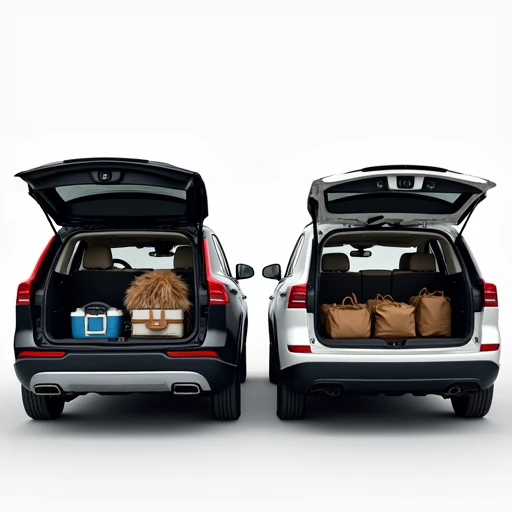
Cargo utility isn't just about cubic feet. It's about whether the space is actually usable: a flat load floor, a low lift-over height, wide openings, and rear seats that fold without requiring a mechanical engineering degree. I looked at independent cargo testing data and real owner feedback on how these vehicles handle strollers, groceries, and weekend gear.
Long-term value factors in five-year depreciation projections, fuel costs over time, and maintenance patterns. The vehicles at the top of this list cost less to own, not just less to buy.
The spec sheet is only half the story. These rankings reflect how these SUVs actually perform in family use, not just how they look on a comparison chart.
The Rankings: Best Two-Row SUVs for Families
1. 2026 Honda CR-V Hybrid — The All-Around Benchmark
The CR-V has been the default answer in this segment for years, and the 2026 hybrid version makes the case stronger. It earned a Top Safety Pick+ from the IIHS, with good ratings in every crash test and superior pedestrian front crash prevention that works in daylight and at night. J.D. Power gives it a predicted reliability score of 83 out of 100.
Cargo space measures 39.3 cubic feet behind the second row in gas models—among the largest in the compact segment. The load floor is low and flat. The rear doors open wide enough to make child-seat installation manageable without contortion. The hybrid powertrain delivers 40 mpg combined with smooth, quiet operation around town. The naturally aspirated Atkinson-cycle engine avoids turbocharger complexity.
Resale value is excellent. Fuel costs are low. The cabin is quiet and comfortable. There's nothing flashy about the CR-V, and that's exactly the point. It does everything a family of four needs without asking for compromises or making excuses.
2. 2026 Toyota RAV4 Hybrid — Best Long-Term Value
The biggest news for 2026: Toyota made the RAV4 all-hybrid. Every model now uses a hybrid powertrain that returns 40 mpg combined. The RAV4 earned a Top Safety Pick rating—one step below the Top Safety Pick+ due to headlight ratings on certain trims, though the hybrid-specific trims perform well. Toyota's hybrid system has over two decades of real-world reliability data behind it.
Cargo space is slightly deeper than the CR-V, though slightly narrower between the wheel wells. The rear doors don't open as wide, which matters for car-seat wrangling. Interior materials are durable but less refined than the Honda's. Where the RAV4 pulls ahead is resale value and the 10-year/150,000-mile hybrid battery warranty, which provides genuine peace of mind for long-term owners.
The RAV4 Hybrid is the spreadsheet champion. Lower purchase price than the CR-V Hybrid, comparable fuel economy, better resale value, and the longest hybrid warranty in the segment. If you plan to keep this SUV past the warranty window, the Toyota's long-term value case is hard to beat.
3. 2026 Subaru Forester — Best for Visibility and All-Weather Confidence
The Forester earned a Top Safety Pick+ award for 2026, building on Subaru's long safety track record. Predicted reliability sits at 82 out of 100 from J.D. Power. Standard all-wheel drive and 8.7 inches of ground clearance provide genuine capability in snow and on unpaved roads.
Where the Forester truly excels is outward visibility. The tall windows, thin pillars, and large rear glass area make it measurably easier to see out of than nearly any competitor. For parents navigating school zones and tight parking lots, this is a safety feature that doesn't appear on any spec sheet but matters every single day.
Cargo space is generous, and the upright roofline means tall items load easily without angling. The naturally aspirated 2.5-liter flat-four engine and CVT have predictable maintenance patterns. Fuel economy trails the hybrids at 29 mpg combined, which adds roughly $1,200 in fuel costs over five years compared to the CR-V Hybrid. For families in snowy climates who prioritize visibility and all-weather traction, the Forester is the smartest pick on this list.
4. 2026 Mazda CX-5 — Best for Driving Enjoyment Without Sacrificing Practicality
The CX-5 earned a Top Safety Pick+ for 2026, continuing Mazda's streak of strong safety performance. It's the driver's choice in the segment—sharper steering, better body control, and a more premium interior than anything else at this price point. The naturally aspirated 2.5-liter engine paired with a conventional six-speed automatic is a conservative, proven powertrain that should age well.
The tradeoff is space. Cargo capacity is the CX-5's weakest point at roughly 30 cubic feet behind the second row. The sloped rear roofline limits tall-item clearance. Rear-seat legroom is tighter than the CR-V or Forester. If cargo volume ranks near the top of your priority list, the CX-5 will frustrate you. If driving enjoyment and interior quality rank higher, the CX-5 rewards the driver in ways its competitors don't.
Mazda's warranty is standard coverage—3 years/36,000 miles limited, 5 years/60,000 miles powertrain—so long-term reliability depends on the vehicle's engineering rather than warranty backing. The data so far is encouraging: the CX-5's reliability scores have climbed steadily in recent years.
5. 2026 Hyundai Tucson Hybrid — Best Warranty and Features Per Dollar
The Tucson Hybrid earned a Top Safety Pick+ award and posts a predicted reliability score of 83 from J.D. Power. Hyundai's 10-year/100,000-mile powertrain warranty is the strongest in the industry, covering roughly 80% of an eight-year ownership window. The hybrid system uses a conventional six-speed automatic rather than a CVT, which some buyers strongly prefer.
Cargo space leads the compact segment in independent testing. The cabin feels more premium than the price suggests, and Hyundai's infotainment system is responsive and easy to use. Where the Tucson trails the leaders is resale value—Hyundai's brand perception still lags Honda and Toyota, which affects residual projections. The lower purchase price helps offset that gap, but buyers planning to trade in after five years should factor in the depreciation difference.
For families who want maximum warranty protection and a feature-rich cabin at a competitive price, the Tucson Hybrid makes a strong case. The value proposition is best for buyers who plan to keep the vehicle long enough to extract most of the warranty coverage.
6. 2026 Ford Escape Hybrid — Underrated and Worth a Look
The Escape Hybrid earned a Top Safety Pick rating and uses a planetary gearset hybrid system similar to Toyota's architecture—Ford licensed the technology years ago and has refined it over multiple generations. Fuel economy matches the segment leaders. Cargo space is competitive. Interior materials are a step below the Mazda and Hyundai, but the Escape is often available with stronger dealer incentives than the Japanese brands.
The Escape's resale value trails the segment leaders, which makes it a better buy for long-term holders who plan to drive the vehicle well past the point where depreciation matters. If your local Ford dealer is discounting while Honda and Toyota lots remain tight, the Escape Hybrid deserves a test drive.
7. 2026 Nissan Rogue — Best Cargo Flexibility
The Rogue earned a Top Safety Pick+ for 2026, and Nissan's reliability scores have improved steadily with the current generation. The 1.5-liter turbocharged three-cylinder engine is unorthodox for the segment—a variable-compression design that's technically interesting but lacks the long-term reliability data of the naturally aspirated and hybrid powertrains on this list. Fuel economy is competitive at 33 mpg combined.
Where the Rogue shines is cargo flexibility. The available Divide-N-Hide cargo system offers a multi-level floor and adjustable shelving that helps organize groceries, sports gear, and emergency supplies. It's a genuinely useful feature. If maximum cargo organization matters more to you than powertrain track record, the Rogue is worth considering.
What Two-Row SUVs Do Better Than Three-Rows
The advantages of a two-row SUV over a three-row equivalent are concrete and measurable. Cargo space behind the second row is almost always larger in a two-row design. The CR-V offers more cargo volume behind its second row than a Toyota Highlander offers behind its third row. You're trading two rarely-used seats for daily cargo capacity you'll actually access.
Fuel economy improves without the weight of a third row and the mechanical drag of the associated hardware. The CR-V Hybrid at 40 mpg combined beats every three-row hybrid SUV on the market by a meaningful margin.
Purchase price savings range from 3,000to3,000to8,000 compared to three-row equivalents from the same brand. That's money that stays in your budget or goes toward higher trim levels with safety features you'll actually use.
Daily usability improves with wider rear door openings, simpler seat-folding mechanisms, and less vehicle length to maneuver in tight parking situations. The things you do every day—loading kids, hauling groceries, navigating school drop-off—are easier in a two-row design.
Which One Is Right for Your Family?
Here's the honest summary. If you want the best all-around two-row family SUV and don't want to overthink it, buy the Honda CR-V Hybrid. It does everything well, compromises on nothing important, and will serve your family for years without drama.
If you want the lowest long-term cost of ownership and plan to keep the vehicle for a decade, buy the Toyota RAV4 Hybrid. The resale value and hybrid battery warranty tilt the spreadsheet in Toyota's favor over extended ownership periods.
If you live where it snows and want the best outward visibility in the segment, buy the Subaru Forester. The all-weather capability and sightlines are genuine safety advantages that matter every winter.
If you want to actually enjoy driving and are willing to trade some cargo space for a premium interior, buy the Mazda CX-5. It's the enthusiast's family SUV without the sacrifices that usually come with that description.
And if you want maximum warranty protection and the most features for your money, buy the Hyundai Tucson Hybrid. Just plan to keep it long enough to capture the warranty's full value.
Every SUV on this list earns its place. None ask you to pay for a third row you'll rarely use. That's the point. Buy the vehicle sized for the family you actually have, not the one the marketing department imagines.
No letters yet — pray write the first.