Let's keep this practical.
The Honda Pilot and Kia Telluride sit at the top of every three-row family SUV shopping list for good reason. Both seat up to eight. Both offer all-wheel drive. Both have reputations for holding up well over time. And both can cross the $50,000 mark when you start checking option boxes—which is exactly where most families start to feel the budget pinch.
Here's what matters: you don't need the top trim to get a safe, capable, comfortable three-row SUV. The lower and mid-level trims of both the Pilot and Telluride deliver nearly everything a family actually needs, and choosing the right one can save you thousands without meaningful sacrifice. Let's compare them where it counts—space, safety, fuel costs, and long-term value at the trims families actually buy.
Space and Seating: Where the Inches Actually Go
Both vehicles offer three rows and seating for up to eight with the bench seat option. But the way they use their interior space differs in ways that matter daily.
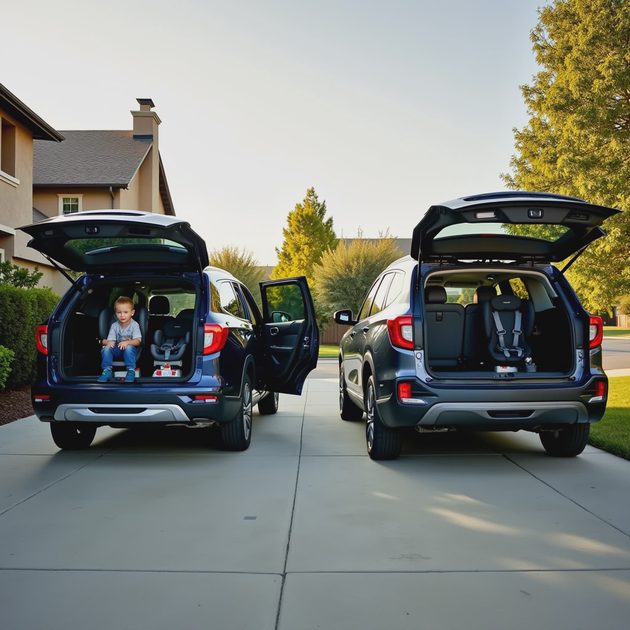
The Honda Pilot's third row offers 32.5 inches of legroom—measurably more than most midsize three-row competitors. An average-sized adult can sit back there for a 30-minute drive without knees pressed against the second-row seatback. The second row slides and tilts forward with one hand even with a child seat installed—a feature Honda calls One-Touch and one that parents in the school pickup line will use every single day. Cargo space behind the third row measures 18.6 cubic feet, expanding to 48.5 behind the second row and 87.0 with all rear seats folded.
The Kia Telluride offers 31.4 inches of third-row legroom—slightly less than the Pilot but still competitive. Where the Telluride pulls ahead is third-row headroom and overall cabin width. The boxier shape means taller passengers sit more upright with less head-ducking. Cargo space behind the third row is 21.0 cubic feet, edging out the Pilot. Behind the second row, it's 46 cubic feet, and maximum cargo volume reaches 87 cubic feet—essentially tied with the Pilot.
The practical difference: the Pilot's third row is easier to access daily, especially with child seats in the second row. The Telluride's cargo area is slightly larger behind the third row. For families who use the third row weekly, the Pilot's access advantage may tip the scale. For families who keep the third row folded most of the time and prioritize cargo, both are excellent.
The spec sheet is only half the story. Sit in the third row of both yourself before deciding. Bring the kids. Bring the car seats. If the salesperson rushes you, that tells you something about which one works better for your family.
Powertrain and Fuel Economy: Different Philosophies
The Pilot uses a naturally aspirated 3.5-liter V6 making 285 horsepower, paired with a 10-speed automatic transmission. It's a conservative, proven powertrain that Honda has refined over multiple generations. The V6 pulls smoothly from low rpm, and the 10-speed keeps the engine in its efficiency zone on the highway. EPA estimates sit at 19 mpg city, 27 highway, and 22 combined with front-wheel drive. All-wheel drive drops those numbers by 1 mpg across the board.
The Telluride uses a naturally aspirated 3.8-liter V6 making 291 horsepower, paired with an 8-speed automatic. The extra displacement provides slightly more torque, and the 8-speed is tuned for smooth shifts rather than maximum efficiency. EPA estimates come in at 20 mpg city, 26 highway, and 22 combined with front-wheel drive—nearly identical to the Pilot. All-wheel drive versions manage 18 city, 24 highway, and 20 combined.
In real-world family driving, both will return similar fuel economy. Both engines run on regular unleaded. Both have established reliability track records. The Pilot's 10-speed transmission is more complex than the Telluride's 8-speed, but Honda's transmission reliability has been solid in recent years. Kia's V6 has been in service long enough that independent shops know it well.
Neither offers a hybrid option for 2026. If fuel economy is a top-three priority, the Toyota Grand Highlander Hybrid or the Kia Carnival hybrid minivan might enter the conversation. But between these two, the fuel cost difference over five years is negligible—roughly 100to100to200 at most. This isn't a differentiator.
Safety and Reliability: Both Strong, With Different Strengths
Both the Pilot and Telluride earned IIHS Top Safety Pick+ awards for 2026, meaning they delivered top marks in every crash test with standard pedestrian front crash prevention that works day and night. This is the highest safety designation available, and both vehicles earn it without caveats. Standard driver-assist features including adaptive cruise control, lane-keeping assist, and blind-spot monitoring are included on every trim level of both vehicles.
Where they diverge is predicted reliability and warranty coverage. J.D. Power gives the 2026 Pilot a predicted reliability score of 84 out of 100—among the strongest in the three-row segment. The Telluride posts a solid 79 out of 100. Honda's reliability reputation is built on decades of consistent performance. Kia's reputation has improved dramatically, but the data still favors Honda on long-term dependability projections.
Kia counters with the best warranty in the business: 10 years/100,000 miles powertrain coverage. Honda's warranty is industry-standard at 5 years/60,000 miles powertrain. For a family planning to keep the vehicle eight years or more, the Kia warranty provides genuine financial protection that Honda doesn't match. The Telluride's slightly lower predicted reliability is partially offset by the warranty backstop. The Pilot's higher predicted reliability is partially offset by the shorter warranty window.
If you plan to keep this SUV past the warranty window, the Pilot's stronger reliability track record matters more. If you plan to sell or trade around the five-year mark, the Kia's warranty transfers to the second owner, which can support resale value.
Trim Strategy: Where the Smart Money Goes
Here's where the budget-friendly part of this comparison gets real. Both vehicles can be equipped well above $50,000. Neither needs to be.
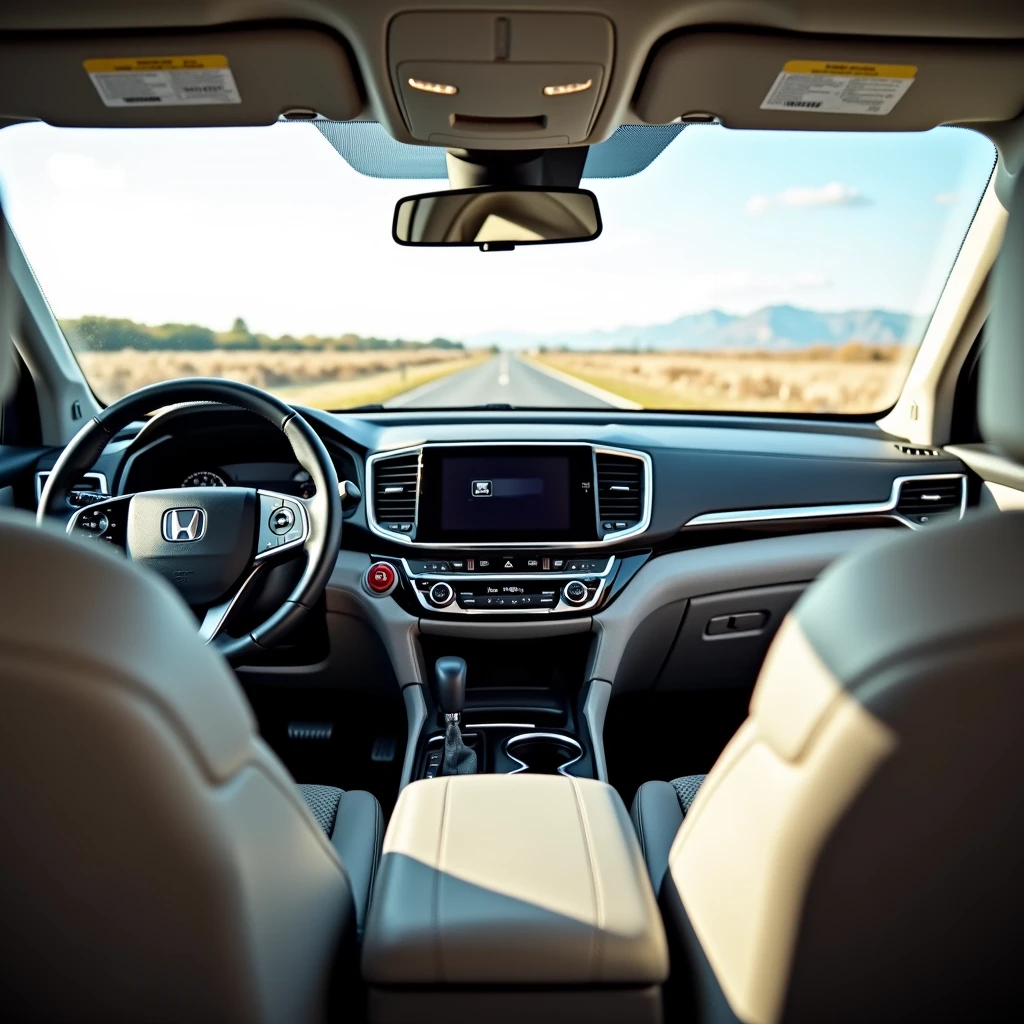
Honda Pilot Sport (starting around $42,000) — This is the value sweet spot in the Pilot lineup. It includes the full Honda Sensing suite, a 9-inch touchscreen with wireless Apple CarPlay and Android Auto, heated front seats, three-zone automatic climate control, and 20-inch wheels. You get the same V6, the same 10-speed, the same safety ratings as the more expensive trims. What you skip: leather upholstery, ventilated seats, premium audio, and a panoramic sunroof. For a family vehicle that will see spilled juice boxes and muddy cleats, cloth seats are easier to maintain than leather. The money you save over the Touring trim stays in your budget.
Kia Telluride EX (starting around $43,000) — The EX represents the Telluride's value proposition at its strongest. You get synthetic leather seating, heated front seats, a 12.3-inch touchscreen, adaptive cruise control with highway driving assist, and second-row captain's chairs with one-touch access to the third row. Kia includes more features at this price point than Honda does—the synthetic leather and larger screen are meaningful upgrades over the Pilot Sport. But the Telluride EX comes standard with 20-inch wheels, which means higher tire replacement costs over time compared to the Pilot Sport's 18-inch standard wheels on lower trims.
The Pilot Sport and Telluride EX are roughly $1,000 apart. The Telluride gives you more features for the money. The Pilot gives you the stronger reliability track record and slightly better third-row access. Both represent excellent value for a three-row family SUV. Neither requires stepping up to a $50,000 trim to get a safe, comfortable, well-equipped vehicle.
Resale Value and 5-Year Ownership Costs
Both vehicles hold their value well, but the shape of that value retention differs.
The Honda Pilot consistently ranks among the top three-row SUVs for resale value. Five-year residual projections from J.D. Power suggest the Pilot will retain roughly 52% to 55% of its original value. Honda's reputation, the Pilot's strong reliability scores, and consistent demand from family buyers support these projections.
The Kia Telluride has been a resale standout since its introduction, but its long-term depreciation curve has more uncertainty. Initial demand has been strong enough that used Tellurides have occasionally sold for near-original prices. As supply normalizes, depreciation is expected to settle closer to segment averages. Current five-year projections land around 47% to 50% retention—strong but below the Pilot.
Fuel costs over five years are essentially a tie. Both average 22 mpg combined, meaning roughly 2,727 gallons of fuel over five years at 12,000 annual miles. At $3.50 per gallon, that's roughly $9,545. The difference between them is within the margin of error for driving style and conditions.
Maintenance costs slightly favor the Pilot. Honda's V6 and 10-speed automatic have predictable service intervals and widely available parts. The Telluride's V6 is reliable but the vehicle is newer to the market, and long-term parts pricing and availability patterns are less established. The Kia warranty covers major powertrain repairs that the Honda warranty won't after year five, which offsets some of this advantage for buyers keeping the vehicle past 60,000 miles.
Insurance quotes should be compared directly for your specific location and driver profile. Both vehicles rate similarly for collision and liability coverage, but regional differences and insurer-specific formulas can create meaningful gaps. Get quotes before buying.
Which One Makes More Sense for Your Family?
Choose the 2026 Honda Pilot if:
Third-row access with child seats installed is a daily priority—the one-touch second-row feature is genuinely useful
Long-term reliability and resale value rank above feature count per dollar
You prefer the more conservative, proven powertrain with wider independent mechanic familiarity
You plan to keep the vehicle well past the warranty window and want the stronger reliability track record
Choose the 2026 Kia Telluride if:
You want more features for your money at the mid-trim level, including synthetic leather and a larger screen
The 10-year/100,000-mile powertrain warranty provides peace of mind for your ownership horizon
Slightly more cargo space behind the third row matters for your daily load
Interior design and cabin width feel more important than third-row access mechanics
My take for the budget-conscious family: At the Sport and EX trims, both vehicles deliver outstanding value for a three-row SUV. The Telluride gives you more features per dollar spent. The Pilot gives you more confidence per year owned. If I were buying today and planning to keep the vehicle eight years or more, I'd lean toward the Pilot—the access convenience for child seats and the stronger long-term reliability data tilt the scale for the family that's in this for the long haul. If I were planning a five-year ownership window, the Telluride's feature advantage and warranty coverage make it the more compelling choice.
Budget-friendly doesn't mean stripped. It means choosing the trim that has what you need and skipping the one that has what the marketing department wants you to want. In both the Pilot and Telluride lineups, the mid-level trims are the smart family money. Buy there, skip the upsells, and put the savings toward the fuel and maintenance budget. That's the practical play.


No letters yet — pray write the first.