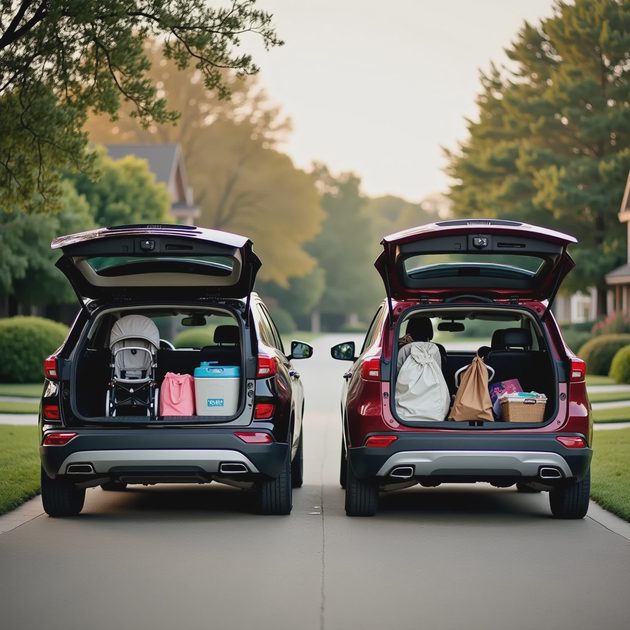
Let's keep this practical.
The Hyundai Santa Fe and Kia Sorento share a parent company, a platform, and a powertrain. On paper, they look like the same SUV wearing different clothes. But the decisions Hyundai and Kia made about body style, seating layout, and trim strategy create real differences for family buyers—differences that show up in daily use, not just the brochure.
If you're cross-shopping these two, you're probably a parent who wants value, a strong warranty, and enough space for kids and cargo without jumping into something Tahoe-sized. Smart approach. Here's how they actually compare where it counts.
The Fundamental Difference: Two-Row vs. Three-Row Thinking
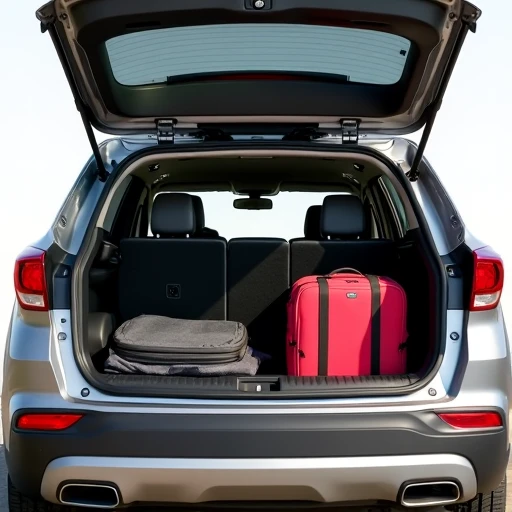
The 2026 Santa Fe is a two-row SUV. The 2026 Sorento offers three rows as standard on most trims. That single decision ripples through everything these vehicles do.
The Santa Fe uses its platform length for generous second-row legroom—41.5 inches—and a cavernous 36.4 cubic feet of cargo space behind the rear seats. That's among the best in the two-row midsize segment. Fold the seats down and you get 72.1 cubic feet. For a family of four, this layout is close to ideal: stretch-out space for passengers, serious cargo capacity for strollers and gear, and no wasted third row eating into either.
The Sorento squeezes three rows into roughly the same overall length. The tradeoffs are immediate and measurable. Second-row legroom shrinks to 40.7 inches with the bench seat option. Cargo space behind the second row drops to roughly 38.5 cubic feet with the third row folded. And when that third row is up, you're left with just 12.6 cubic feet—barely grocery-run territory, not family road trip territory.
The spec sheet is only half the story. In daily family use, the Santa Fe's two-row layout means lifting toddlers into car seats is easier because the rear doors open wider and the seat base sits at a natural height. The Sorento's third row, like most compact three-row designs, is kid-only space that your children will outgrow before the loan is paid off.
If you genuinely need three rows for weekly use with growing kids, the Sorento technically offers them. But in this size class, the third row is an emergency backup, not a daily solution. For most families of four or five, the Santa Fe's two-row layout is the more practical choice.
Powertrain: Same Family, Different Flavors
Both SUVs share Hyundai Motor Group's powertrain options, but the execution differs in ways that affect your long-term ownership costs.
The Santa Fe offers a 2.5-liter turbocharged four-cylinder making 277 horsepower paired with an eight-speed dual-clutch transmission. It's a strong engine that moves the Santa Fe with confidence, even fully loaded. Fuel economy lands at an EPA-estimated 24 mpg combined with front-wheel drive, 23 with AWD. The hybrid option delivers 36 mpg combined and uses a conventional six-speed automatic—a simpler, potentially more durable transmission than the dual-clutch.
The Sorento offers more variety. The base engine is a naturally aspirated 2.5-liter four-cylinder at 191 horsepower with a conventional eight-speed automatic. It's adequate but will feel underwhelming with a full passenger load. The upgrade turbocharged 2.5-liter matches the Santa Fe's output. A plug-in hybrid option offers up to 32 miles of electric range. For families who can charge at home and have short commutes, the Sorento PHEV could genuinely reduce fuel costs. But the higher purchase price requires careful math to see if the fuel savings offset the upfront premium.
The hybrid and plug-in hybrid variants from both brands use conventional automatic transmissions, not the dual-clutch. If you plan to keep this SUV past the warranty window, the hybrid versions deserve extra consideration for their simpler transmission architecture. Dual-clutch transmissions have improved dramatically, but they still require more expensive fluid services and can exhibit low-speed hesitation that's annoying in school pickup lines and parking lots.
Interior Quality and Daily Usability
Here's where the shared platform diverges most noticeably.
The 2026 Santa Fe received a full interior redesign that genuinely elevates the cabin. The dual 12.3-inch screens are crisp and integrated into a curved display that's easy to read at a glance. Physical HVAC controls survived the redesign—a practical win for gloved winter hands and eyes-free adjustment. The center console offers clever storage, including a dual-opening lid that both front passengers can access without reaching across. Materials are a noticeable step above the outgoing model, with soft-touch surfaces on the dashboard and door panels exactly where elbows and knees land.
The Sorento's interior is well-built but more conservative in design. The screens are smaller on lower trims. Some controls have migrated to touch-sensitive panels—the kind that accumulate fingerprints and require visual attention to operate. The material quality is good for the segment but doesn't match the Santa Fe's more premium feel. Where the Sorento does better is in small-item storage: more cupholders, more door pocket volume, and USB ports in all three rows on higher trims.
For families with young children, the Santa Fe's simpler two-row layout and wider rear door openings make car-seat installation and daily loading less of a wrestling match. The Sorento's third row means you're navigating tighter door openings and more complex seat-folding sequences to access the wayback. With rear-facing seats installed, the Sorento's second row may need to slide forward, compromising legroom for everyone.
Resale Value and 5-Year Ownership Costs
Both brands have improved their resale value significantly over the past decade, but neither matches Honda or Toyota on depreciation. Between these two, the Santa Fe holds a measurable advantage.
Kelley Blue Book and J.D. Power residual value projections show the Santa Fe retaining approximately 48-50% of its original value after five years, compared to roughly 44-47% for the Sorento. The gap widens slightly for three-row Sorento trims, which compete against larger, more desirable three-row vehicles and tend to depreciate faster.
The Hyundai warranty—10 years/100,000 miles powertrain, 5 years/60,000 miles limited—matches Kia's coverage. Both are the strongest in the industry. The value of that warranty depends on how long you keep the vehicle. If you sell at five years, you've captured most of the warranty's value. If you keep it for eight or more, the powertrain coverage provides genuine peace of mind that Honda and Toyota buyers don't get.
Fuel costs over five years slightly favor the Santa Fe Hybrid at 36 mpg combined. The standard turbo engine's 24 mpg means roughly $8,750 in fuel over five years at $3.50 per gallon—about $1,400 more than the hybrid. The Sorento's naturally aspirated base engine delivers similar mpg to the Santa Fe turbo but with less power. The Sorento PHEV could deliver the lowest fuel costs for the right buyer, but only if you consistently plug in and drive within its electric range.
Which One Makes More Sense for Your Family?
Choose the 2026 Hyundai Santa Fe if:
You have two or three kids and don't need a third row
Maximum cargo space and rear passenger room are daily priorities
You want the more refined interior with physical HVAC controls
Slightly stronger resale value matters to your long-term budget
The hybrid's 36 mpg and conventional automatic transmission appeal to you
Choose the 2026 Kia Sorento if:
You genuinely need three rows in a smaller package—and accept the limitations
The plug-in hybrid option fits your driving patterns and you can charge at home
A lower starting price is appealing, and you're willing to trade some refinement
You carry more small items and value maximum cupholders and USB ports
My take for the typical family of four: The Santa Fe is the more practical vehicle. It takes the shared platform and powertrain and packages them around what most families actually need—space, comfort, and simplicity. The Sorento's third row is a feature that sounds useful on paper but rarely justifies its compromises in daily life unless you're genuinely filling it on a weekly basis.
If you need three rows regularly, buy a vehicle designed around them from the start—something like a Telluride, Palisade, or Pilot. The Sorento's third row is a compromise, and compromises have a way of resenting over time. The Santa Fe knows what it is and executes it well.

No letters yet — pray write the first.