
Let's keep this practical.
A rear-facing car seat behind the front passenger seat is one of the tightest fits in the automotive world. The car seat pushes the front seat forward. The front passenger—often a parent who just finished buckling a toddler—climbs in and finds their knees pressed against the dashboard. On a ten-minute drive to daycare, it's annoying. On a three-hour trip to visit grandparents, it's unbearable.
Not every compact SUV handles this well. The published spec for rear legroom doesn't tell you what happens when a rear-facing seat is actually installed. Some vehicles with generous numbers on paper become cramped in practice. Others with modest specs use their space more efficiently. Here's which SUVs let both adults sit up front in reasonable comfort, based on real measurements and owner reports.
The Measurement That Actually Matters
Rear legroom is the number everyone checks. It's useful but incomplete. What matters more for rear-facing car seat clearance is the distance between the back of the front seat and the rear seat cushion, with the front seat positioned for a real adult.
A typical rear-facing convertible car seat requires roughly 30 to 33 inches of depth from the rear seatback to the back of the front seat. Some compact models like the Clek Fllo and Diono Radian are shallower, but most families buy standard-size convertible seats in the 30-to-33-inch range. If the front passenger seat must be moved forward to accommodate that depth, the front legroom shrinks accordingly.
The vehicles that handle this best have one of two things: either genuinely deep second-row space that absorbs the car seat without affecting the front seat, or a cabin layout that positions the front seat high enough that the car seat shell can tuck slightly underneath. Vehicles that struggle tend to have sculpted front seatbacks that push the car seat forward, or rear seats positioned close to the front seats to prioritize cargo space over passenger room.
The spec sheet is only half the story. Bring your actual car seat to the dealership. Install it behind the passenger seat. Then sit in the passenger seat yourself. If your knees are touching the glovebox, the vehicle fails the test—no matter what the legroom number says.
Compact SUVs That Pass the Rear-Facing Test
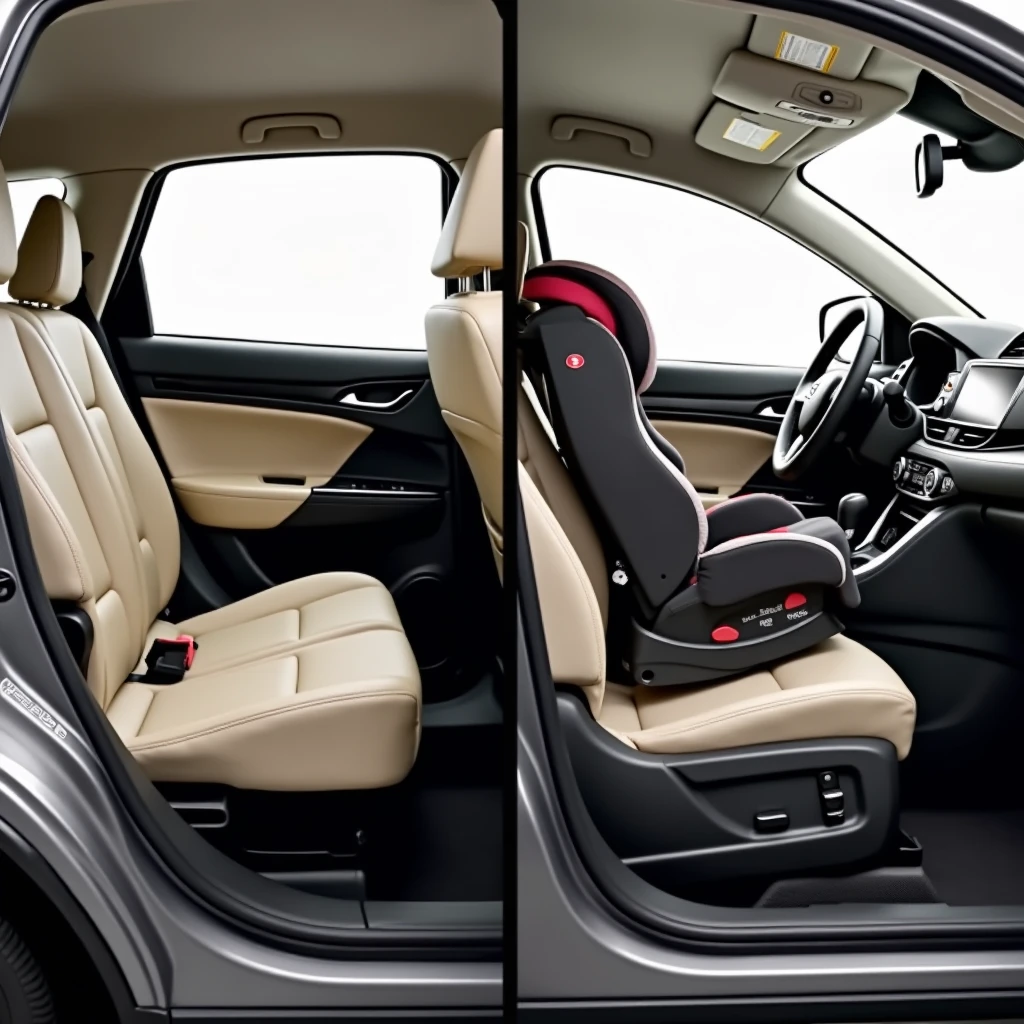
The compact SUV segment is where most families shop, and it's where rear-facing clearance varies the most. Here are the standouts based on independent testing and owner feedback.
Honda CR-V — The segment leader for rear-seat space. With 41 inches of rear legroom, the CR-V absorbs a rear-facing car seat without forcing the front passenger seat far forward. A six-foot-tall adult can sit in the front passenger seat with a standard rear-facing convertible installed behind it and still have knee clearance. The rear doors open nearly 90 degrees, making it easier to lift a toddler into the seat without ducking. If rear-facing clearance is a top priority and you only want to test-drive one vehicle, start here.
Hyundai Tucson — The redesigned Tucson offers rear legroom that rivals the CR-V, and the front passenger seat can be positioned comfortably even with a rear-facing seat installed. The Tucson tied for the tallest cargo area in independent cargo testing, which also translates to a more upright rear seating position—helping car seats fit with less front-seat intrusion. The available hybrid version adds the efficiency benefit without sacrificing interior space.
Subaru Forester — The Forester's tall roofline and upright rear-seat design create generous vertical space, which matters for lifting a child into a rear-facing seat without ducking. Rear legroom is competitive, and the wide-opening rear doors ease the loading process. The Forester's naturally aspirated engine and standard all-wheel drive are bonuses for families in cold climates. The front passenger seat can accommodate a six-foot adult with a rear-facing convertible installed, though with slightly less margin than the CR-V.
Volkswagen Tiguan — The Tiguan was the only compact SUV in an independent eight-vehicle child-seat fit test to earn zero deductions for fitment or usability. It offers generous rear legroom and a tall roofline, and the rear seat slides fore and aft—useful for adjusting the balance between passenger space and cargo. For families considering a compact SUV with an optional third row, the Tiguan's sliding second row adds flexibility that fixed seats don't.
Mazda CX-5 — The honest assessment: the CX-5 is tight for rear-facing seats. Rear legroom measures 39.6 inches on paper, but the sculpted front seatbacks push car seats forward in practice. A six-foot front passenger will have their knees close to the dashboard. Shorter front passengers may be comfortable. If the CX-5 is on your list for its driving dynamics and interior quality, test the rear-facing fit with your specific car seat and your specific front passenger before committing. For many families, this alone pushes them toward the CR-V or Forester.
Midsize SUVs: More Room, But Not Always
Moving up to a midsize SUV usually solves the rear-facing clearance problem, but not universally. Some midsize models prioritize third-row space or cargo capacity over second-row passenger room.
Hyundai Santa Fe — The two-row Santa Fe offers 41.5 inches of rear legroom, the best in its class. A rear-facing convertible fits easily without compromising front passenger space. The rear doors open wide, the roof is tall, and the flat rear floor means the car seat sits level without tipping. This is one of the most accommodating vehicles on the market for families in the rear-facing stage.
Honda Passport — The two-row Passport shares its platform with the Pilot but removes the third row entirely, devoting that space to passenger and cargo room. The result is one of the roomiest second rows in any SUV. A rear-facing car seat fits with room for a six-foot-plus front passenger to stretch out. For families who want maximum space without a third row, the Passport deserves a look.
Toyota Highlander — The three-row Highlander prioritizes cargo and third-row packaging over second-row space. Rear legroom is adequate but not generous by midsize standards, and a rear-facing convertible will nudge the front passenger seat forward. Shorter passengers will be fine. Taller passengers may feel the pinch. If the Highlander is on your list for its reliability and resale value, confirm the rear-facing fit before buying.
Chevrolet Traverse — The Traverse offers one of the roomiest second rows in the three-row segment. Rear legroom is generous, and a rear-facing car seat fits without significant front passenger compromise. If you need three rows and rear-facing clearance simultaneously, the Traverse and Volkswagen Atlas are the two strongest candidates.
What Happens When You Have Two Rear-Facing Seats
Two rear-facing car seats raise the stakes. Now both front seats are affected—driver and passenger. If one parent is tall and the other is not, the shorter parent can take the side with the larger car seat. But if both parents are tall, or if the driver needs significant legroom, the vehicle choice becomes critical.
The vehicles that handle two rear-facing seats best are the Honda CR-V, Hyundai Santa Fe, Honda Passport, and Subaru Forester. All offer enough rear legroom that two standard rear-facing convertibles can be installed without forcing both front seats into the dashboard. The driver's seat may need to come forward slightly from its ideal position, but within a tolerable range for most drivers.
Vehicles that struggle with two rear-facing seats include the Mazda CX-5, Toyota RAV4, and most compact three-row SUVs where the second row has been pushed forward to make room for the third row. In these vehicles, two rear-facing seats often mean both front occupants sacrifice legroom, which can make longer trips genuinely uncomfortable.
If you're in the stage where two rear-facing seats are a reality, prioritize vehicles with at least 40 inches of rear legroom. That's the threshold where the conversation shifts from "can we make this work" to "this actually fits."
What I'd Recommend to a Friend
If rear-facing car seat clearance is your primary concern and you want the simplest answer, test the Honda CR-V first. It has the most rear legroom in the compact segment, the widest-opening rear doors, and a flat rear floor that makes car seat installation straightforward. If the CR-V works for your specific car seat and your specific front passenger, you've found your vehicle.
If the CR-V doesn't fit, or you want something larger, look at the Hyundai Santa Fe or Honda Passport. Both offer more rear legroom than most three-row SUVs and remove the third-row complexity entirely. The rear-facing stage lasts roughly two to four years per child depending on when you transition to forward-facing. That's long enough that daily comfort genuinely matters. Don't spend those years with your knees on the dashboard because the legroom number looked fine on the spec sheet.


No letters yet — pray write the first.