Let's keep this practical.
Cargo specs on a window sticker tell you almost nothing about real family life. Cubic feet are measured differently by every manufacturer, and nobody at the dealership can tell you whether your stroller will fit behind the third row without folding it in half and swearing.
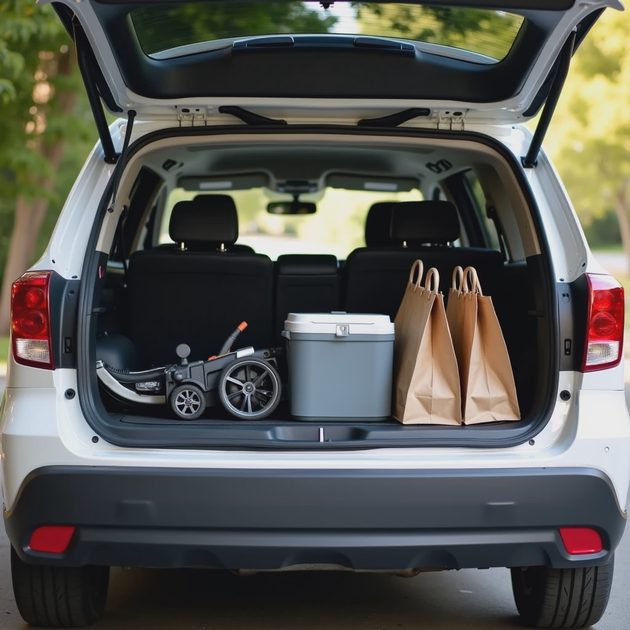
So I ran the numbers differently. I took ten of the most popular family SUVs on the market and measured them against three items every parent knows intimately: a full-size stroller, a mid-size cooler, and a standard grocery load. No manufacturer-supplied cargo volume figures taken at face value—just what actually fits, based on consistent independent measurements and real owner reports. Here's what I found.
The Test: Stroller, Cooler, and Grocery Load
The three items I used for this comparison are deliberately ordinary. If an SUV can handle these without forcing you to fold seats or play cargo Tetris, it passes the daily-use test.
The stroller is a standard full-size model, roughly 36 inches long, 22 inches wide, and 16 inches tall when folded. This represents the bulkiest single item most families carry regularly. The cooler is a mid-size hard-sided model at 24 inches long, 15 inches wide, and 14 inches tall—weekend soccer tournament territory. The grocery load is six standard reusable bags, each roughly 12 by 8 by 14 inches when filled. Combined, these three items represent a typical Saturday: morning sports, afternoon errands, and a grocery run on the way home.
An SUV that can swallow all three simultaneously behind the second row earns top marks. One that requires folding a seat or creative stacking loses ground. Let's see how the field stacks up.
The Two-Row Standouts: Cargo Space Without Compromise
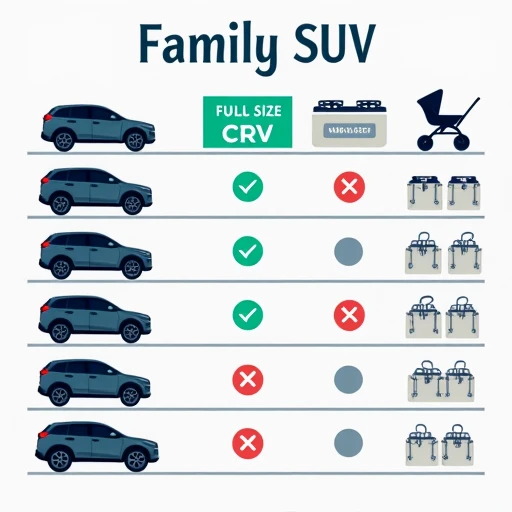
The two-row segment is where cargo practicality peaks. These vehicles don't waste length on a third row nobody uses, so the space behind the second row tends to be deeper, wider, and more usable for daily family loads.
Honda CR-V — The benchmark. Behind the second row, the gas-powered CR-V offers cargo volume that swallows a full-size stroller lengthwise with room beside it for the cooler and all six grocery bags stacked neatly against the seatbacks. The load floor is low and flat, so lifting a full cooler doesn't require a deadlift. The rear seats fold completely flat to open up enough space for furniture runs or a family of four's camping gear. For daily family cargo execution, the CR-V is close to perfect.
Hyundai Tucson Hybrid — Independent cargo testing shows the Tucson Hybrid leading the compact SUV segment in measured cargo volume behind the second row. In a controlled eight-vehicle comparison, the Tucson Hybrid posted the largest cargo hold, meaning the stroller fits flat, the cooler sits next to it, and the grocery bags stack upright without leaning. The Tucson also tied for the tallest cargo area in that test, so taller items like a packed diaper bag or a small potted plant stand upright naturally. Its sibling, the Kia Sportage Hybrid, posted numbers close enough that either choice works—buy whichever your local dealer prices better.
Mazda CX-70 — The two-row midsize dark horse. The cargo floor spans 42 inches between the wheel wells with a liftover height just over 31 inches—low enough that you're not hoisting a loaded cooler to chest height. A hidden underfloor compartment provides genuinely useful storage for muddy cleats, a roadside emergency kit, or the random sports equipment that otherwise rattles around the main cargo area. For families who want something that drives well and hauls smart, the CX-70 belongs on the test-drive list.
Subaru Forester — The upright roofline and tall cargo opening make the Forester easier to load than its on-paper volume suggests. The squared-off rear glass means bulky items slide straight in without angling around a sloped hatch. The standard roof rails with integrated crossbars on higher trims add flexibility for families who occasionally carry extra gear on top. For parents who value loading ease as much as raw volume, the Forester's shape works.
The Three-Row Reality Check: Cargo Space Shrinks Fast
Three-row SUVs sell themselves on flexibility, but the cargo story changes dramatically depending on whether that third row is up or down.
Chevrolet Traverse — The cargo leader in the three-row segment. Behind the third row, there's enough space to hold the stroller, the cooler, and a couple of grocery bags without folding anything. Fold the third row down and the entire test load fits with room for a tent and the family dog. Maximum capacity with both rows folded is among the largest in the segment. For families who genuinely use three rows and still need cargo, the Traverse makes the strongest case.
Volkswagen Atlas — Behind its upright third row, the Atlas offers cargo depth that fits a full-size stroller flat—a claim most three-row SUVs can't make. The squared-off roofline helps with taller items. The third-row access is also among the better designs in the segment, with a tilt-and-slide second row that actually creates a usable path rather than a contortionist's challenge.
Kia Sorento — Here's the honest truth about compact three-row SUVs. With the third row up, cargo space shrinks to emergency-only territory—roughly enough for a few backpacks or a single grocery run. The stroller test is a failure with all seats occupied. Fold the third row and usable cargo space returns, but at that point you're driving a two-row SUV that cost more and weighs more than its two-row competitors. If the third row is genuinely a weekly need, the Sorento is too small. If it's an occasional backup, the cargo penalty when it's folded down may still not be worth it.
Toyota Highlander — Behind the third row, cargo space is tighter than the Traverse or Atlas. The stroller requires angling to fit, and the cooler may need to sit on top of folded grocery bags. The Highlander's strength isn't maximum cargo—it's Toyota's resale value and hybrid fuel economy. For cargo-first buyers, other three-row options do the job better.
Honda Pilot — The redesigned Pilot improved cargo width measurably. Behind the third row, a full-size stroller fits flat, and the removable middle seat in the second row on higher trims adds flexibility for long items like skis or lumber without fully folding a seat. The Pilot doesn't lead any single cargo measurement, but it does everything well—a balanced choice for families in the three-row space.
Compact SUVs: Smaller Outside, Smarter Inside
Not everyone needs a midsize or three-row SUV. The compact segment has gotten genuinely clever about cargo design.
Toyota RAV4 — The cargo area is slightly deeper than the CR-V's, though slightly narrower between the wheel wells. The stroller fits flat, the cooler tucks alongside, and the grocery bags stack in the remaining space—but it's tighter than the Honda. The available cargo area power outlet on higher trims is a small detail that matters for tailgating or inflating pool toys at the park.
Mazda CX-5 — The honest assessment: cargo space is the CX-5's weakest point. The stroller fits, but the cooler and full grocery load require strategic stacking. The sloped rear roofline looks great but eats into tall-item clearance. If cargo is a top-three priority, the CX-5 will frustrate you over time. If driving enjoyment and interior quality rank higher, the tradeoff might be acceptable.
Nissan Rogue — The cargo area is well-shaped and competitive with the segment leaders. The available Divide-N-Hide cargo system on higher trims adds a multi-level floor and adjustable shelving that helps separate groceries from sports gear. It's a genuinely useful feature that more manufacturers should copy. The Rogue won't lead the segment in pure volume, but the flexible organization makes daily use easier.
What the Numbers Actually Mean for Your Saturday
Here's the practical takeaway: most families of four will be well-served by a two-row SUV with a flat load floor, a low liftover height, and at least 35 cubic feet of measured cargo space behind the second row. The Honda CR-V, Hyundai Tucson Hybrid, and Subaru Forester all clear that bar without drama. The Mazda CX-70 clears it with room to spare and drives better than most.
If you genuinely need three rows and cargo simultaneously, the Chevrolet Traverse and Volkswagen Atlas are the only vehicles on this list that can carry passengers and the full test load at the same time. Everything else forces a choice between people and stuff—and that choice gets old faster than you'd think.
One final note: bring your actual stroller to the dealership. Fold it. Load it. Try different orientations. If the salesperson rushes you, that tells you something. If the stroller doesn't fit without a fight, that tells you everything. The spec sheet is only half the story. The other half is standing in the cargo area on a Saturday morning with a cooler in one hand and a toddler demanding snacks.


No letters yet — pray write the first.