Let’s keep this practical.
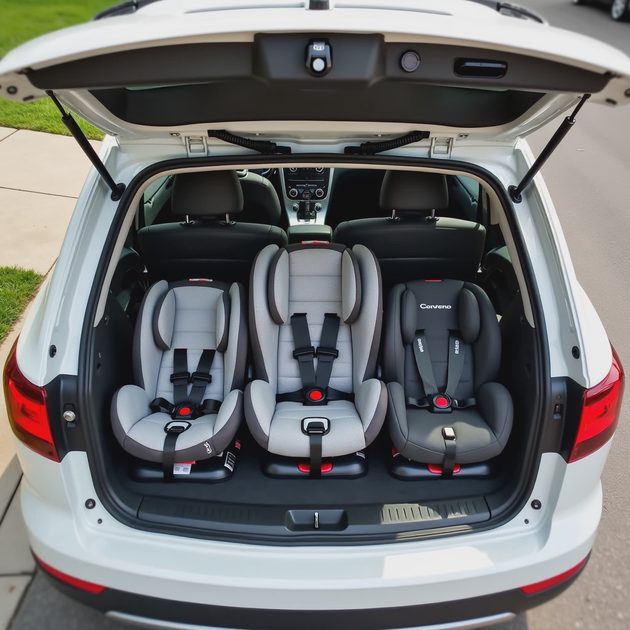
Three car seats across the back seat. It sounds simple—until you’re standing in a dealership lot, sweating through your shirt, trying to wedge a booster between two rear-facing convertibles while a salesperson says “it should fit.”
Here’s what actually matters: rear hip room, backseat width between the door panels, and whether the seat bottom is flat enough to let three seats sit evenly. Spec sheets won’t tell you any of that. So I dug into the numbers, the owner forums, and the independent testing data to find which compact SUVs actually pass the three-across test without making you hate your life.
The Measurement That Matters More Than Specs
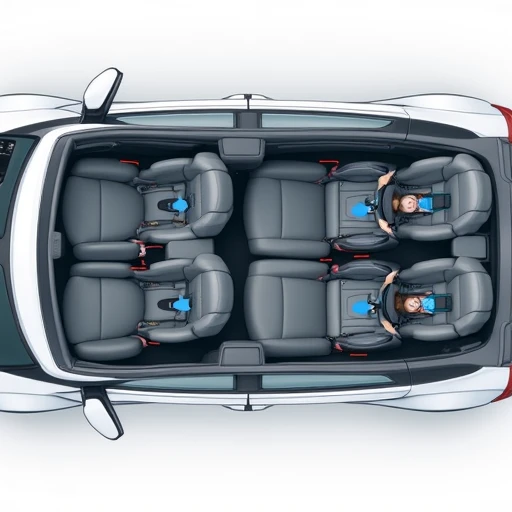
Automakers publish “hip room” figures that measure seats at cushion level. Those numbers are fine for comparison shopping—but they don’t capture the real pinch point: the space between the interior door panels at child-seat height. That’s where car seats actually live.
For three-across installations, you need roughly 52 inches of functional width at seat level, minimum. That typically requires a published rear hip room of at least 54 inches once you account for door panel contours, armrests, and seat bolsters that eat into usable space. Narrower than that, and you’re shopping for specialty narrow car seats—which adds another few hundred dollars to the equation.
Here’s what that looks like in practice: the Honda CR-V posts 52.6 inches of rear hip room, and owners consistently report success with three-across setups using standard-width seats. The Toyota RAV4 sits at 49.6 inches, and the forums are full of parents who couldn’t make it work without switching to expensive slim-fit models. That three-inch gap on paper translates directly to whether you’re buying new car seats or not.
The spec sheet is only half the story. Seat bottom contour matters just as much as raw width—raised bolsters on outboard positions can tilt child seats inward, wasting space you thought you had.
Which Compact SUVs Actually Pass the Test
Based on real-world owner reports, independent car-seat fit testing, and the dimensional data, here are the compact SUVs that consistently earn passing marks for three-across installations:
Honda CR-V — Rear hip room of 52.6 inches. The flat seat bottom and wide-opening rear doors make this the most frequently cited winner in parent forums. Multiple owners report fitting two rear-facing seats and a booster without switching to specialty narrow models. This is the benchmark.
Volkswagen Tiguan — The 2026 model was the only compact SUV in an independent eight-vehicle comparison test to earn an “excellent” rating for child seat installation. Judges specifically called it the “car-seat champ.”
Subaru Forester — While the published hip room is slightly narrower than the CR-V, the upright roofline and tall door openings make installation physically easier. Parents report that the squarer shape reduces the contortionist-factor when buckling boosters in the middle position.
Hyundai Tucson — The redesigned interior offers competitive width and a notably flat rear bench. Not quite as spacious as the CR-V, but owners report success with two narrow seats plus a backless booster.
On paper, vehicles like the Mazda CX-5 and Toyota RAV4 look close—but they consistently fall short in real-world testing. The CX-5’s sculpted outboard seats tilt child seats inward. The RAV4’s narrower hip room forces parents toward slim-fit options. If you’re shopping these models, bring your actual car seats to the test drive and don’t skip the middle position.
Before You Buy: What Three-Across Really Demands
Three car seats across isn’t just about the vehicle. It’s a system problem—and the vehicle is only one variable.
Car seat width is the silent budget-killer.
Standard convertible seats run 18-19 inches wide. Three of those need 54-57 inches of functional space. If your SUV offers less, you'll need narrow models like the Diono Radian 3R (17 inches wide) or Clek Fllo (16.9 inches). Those premium slim seats often cost $50–150 more than standard equivalents—per seat. If you're replacing three car seats to fit a vehicle you just bought, you're absorbing a hidden $300–500 cost that no window sticker discloses.
Installation order matters more than you’d think.
With three car seats, seat belt geometry and buckle placement can make or break a setup. The middle position is almost always the hardest—buckle stalks that sit proud of the seat cushion prevent secure installation. Inflatable seat belts (found in some Ford and Mercedes models) are incompatible with many car seats entirely.
LATCH limits are a trap.
Most vehicles limit LATCH use to 65 pounds combined child-and-seat weight and only in outboard positions. For three-across setups, you’ll likely need to use seat belt installations for at least two of the three seats. Make sure the seat belts lock properly in all three positions.
If you plan to keep this SUV past the warranty window, pay attention to how the rear seat upholstery holds up. Three car seats rubbing against the same surfaces for five years will leave marks that affect your resale trade-in offer. Seat protectors are cheap insurance.
What I’d Tell My Brother
If you’re dead set on three car seats across a compact SUV, the Honda CR-V is the safest starting point. Bring your actual seats to the dealership, install all three in the configuration you’ll actually use, and don’t let anyone rush you. If the CR-V doesn't work for your specific seat combination, try the Tiguan or Forester before you start shopping for new car seats or—worse—talk yourself into a third row you don't really need.
One last thing: the right answer might be a minivan. I know. I know. But if you’re genuinely going to run three car seats for years, sliding doors and a flat floor will make your daily life easier than any compact SUV ever will. Sometimes practical beats proud.


No letters yet — pray write the first.