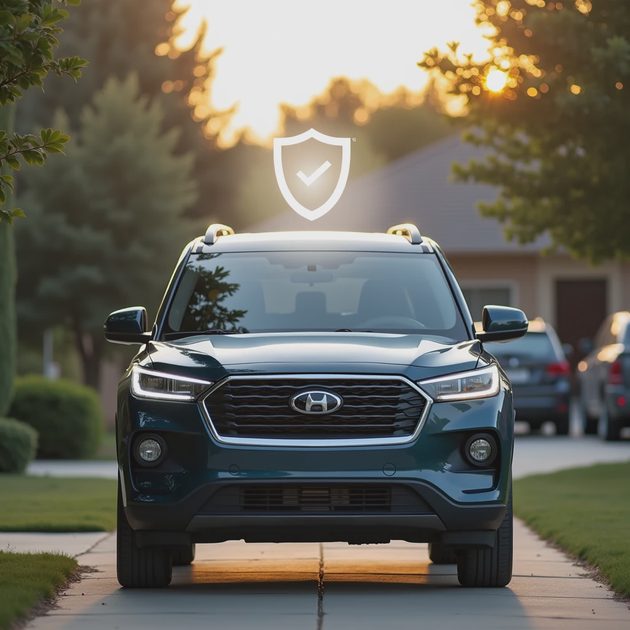
Let's keep this practical.
Eight years is a long time to own a vehicle. Long enough that the factory warranty becomes a distant memory. Long enough that your kids move from kindergarten to high school inside the same back seat. Long enough that the difference between a smart safety pick and an average one compounds into something measurable: real protection when it matters, and real money saved on repairs when it doesn't.
This list isn't about which midsize SUVs scored well in a single crash test last year. It's about which ones combine top-tier safety engineering with the kind of long-term reliability that keeps you from standing in a repair shop wondering if you should have bought something else. Every vehicle here earned a Top Safety Pick or Top Safety Pick+ from the IIHS for 2026, and every one has reliability projections that suggest it will still be solid at the eight-year mark.
How I Defined "Safe" for an 8-Year Ownership Window
Safety ratings capture a vehicle's crashworthiness and crash prevention technology in controlled conditions. That's essential. But for a parent planning to keep a vehicle eight years, safety also means something broader: the vehicle needs to remain dependable enough that you're not distracted by warning lights, stranded by breakdowns, or forced into a premature trade-in by repair costs.
For this ranking, I weighted three factors equally. IIHS Top Safety Pick+ status for 2026 matters because it represents the highest current standard—vehicles that earn good ratings in every crash test, offer pedestrian front crash prevention that works day and night, and ship with headlights that actually illuminate the road ahead. J.D. Power predicted reliability scores project how well a vehicle will hold up over time, based on historical data and owner surveys. Warranty coverage that extends meaningfully into an 8-year ownership period provides a financial backstop. Hyundai and Kia's 10-year/100,000-mile powertrain warranty genuinely outperforms the industry-standard 5-year/60,000-mile coverage here.
Vehicles that clear all three bars earn their place. The spec sheet is only half the story—the other half is whether the safety engineering is backed by the kind of build quality that keeps those systems functioning properly at year seven, not just at the dealership test drive.
The Ranking: 7 Safest Midsize SUVs for Long-Term Owners

1. 2026 Hyundai Santa Fe — Best Overall Long-Term Safety Value
The redesigned Santa Fe earned a 2026 IIHS Top Safety Pick+ award, meaning it delivered good ratings across every crash test with standard pedestrian front crash prevention that works well in both daylight and nighttime conditions. J.D. Power rates the Santa Fe at 85 out of 100 for predicted reliability—among the strongest scores in the midsize segment. The Hyundai warranty provides 10 years or 100,000 miles of powertrain coverage, which means for a family keeping the vehicle eight years, roughly 80% of that ownership window falls under warranty protection. That's real peace of mind. The cabin is spacious, the hybrid option delivers 36 mpg combined, and the physical HVAC controls survived the redesign intact.
2. 2026 Kia Sorento — Best Three-Row Safety Pick Under Warranty
The 2026 Sorento earned Top Safety Pick+ status for vehicles built after September 2025. It shares Hyundai's 10-year/100,000-mile powertrain warranty and posts a solid predicted reliability score of 82 from J.D. Power. The Sorento offers three rows in a relatively compact footprint, which introduces the usual cargo compromise—but for families who need the extra seats without stepping up to a Telluride-sized vehicle, the Sorento combines long-term warranty protection with top-tier crash safety. The available turbocharged engine and conventional automatic transmission provide capable daily performance, though the hybrid version with its simpler six-speed automatic deserves extra consideration for buyers focused on long-term durability.
3. 2026 Mazda CX-70 — Best Safety Engineering With Driving Character
Mazda placed four vehicles on the 2026 Top Safety Pick+ list, and the CX-70 is the two-row midsize option that best fits families who don't need a third row. Mazda's reliability ratings have climbed steadily in recent years, and the naturally aspirated engine options paired with a conventional six-speed automatic represent a conservative, proven powertrain that should age predictably. The CX-70's interior feels more premium than its price suggests, and cargo space is generous behind the second row. The warranty is standard—3 years/36,000 miles limited, 5 years/60,000 miles powertrain—so the safety engineering carries more of the long-term value argument here.
4. 2026 Subaru Ascent — Best for Cold-Climate Families Thinking Long-Term
The Ascent earned Top Safety Pick+ status for 2026. J.D. Power rates predicted reliability at 82 out of 100 and gives the Ascent a value score of 9.0 out of 10—strong numbers that reflect Subaru's loyal owner base and consistent resale performance. Standard all-wheel drive and Subaru's EyeSight driver-assist technology come on every trim. The third row is tight for adults but functional for children, making the Ascent a practical three-row option for families in snowy states who plan to drive past 150,000 miles. The naturally aspirated engine and CVT have predictable maintenance patterns that independent shops know well, which matters when the warranty expires.
5. 2026 Nissan Pathfinder — Most Improved Safety Credentials
The redesigned Pathfinder earned a 2026 Top Safety Pick+ award, representing a significant safety achievement for a vehicle that in previous generations didn't always top the crash-test rankings. The Pathfinder uses a naturally aspirated V6 paired with a conventional nine-speed automatic transmission—a traditional powertrain architecture that avoids turbo complexity and should age well over an extended ownership window. Three-row seating is standard, and cargo space behind the third row is competitive with the segment leaders. Nissan's warranty coverage is standard—3 years/36,000 miles limited, 5 years/60,000 miles powertrain—so the Pathfinder's case rests on its improved safety engineering rather than warranty backing.
6. 2026 Toyota Highlander — Best Resale Value With Strong Safety
The Highlander earned Top Safety Pick status for 2026—one step below the Top Safety Pick+ designation but still a strong safety performer. Toyota's hybrid system has decades of proven reliability behind it, and resale value projections consistently place the Highlander near the top of the segment. The hybrid version delivers 36 mpg combined, which over eight years of family driving translates to meaningful fuel savings compared to non-hybrid competitors. The third row is among the tighter options in the midsize class, making the Highlander best suited to families who need occasional third-row access rather than daily use. Toyota's warranty is standard coverage—3 years/36,000 miles limited, 5 years/60,000 miles powertrain, with the hybrid battery covered for 10 years/150,000 miles.
7. 2026 Honda Pilot — The Balanced All-Rounder
The Pilot earned a Top Safety Pick for 2026. Honda's predicted reliability scores have been consistently strong, and the naturally aspirated V6 with a conventional automatic transmission represents a conservative, proven powertrain design that independent mechanics know well. The redesigned Pilot offers the most spacious third row in this group—genuinely usable for adults on shorter trips—and cargo space behind the third row is among the segment leaders. The warranty is standard Honda coverage, but real-world reliability data suggests Pilots routinely reach high mileage without major repairs. For families who plan to keep a three-row SUV well past the warranty window, the Pilot's mechanical simplicity and strong reliability track record make it a quietly confident choice.
Features That Keep Your Family Safer Over Eight Years
Some safety features provide more long-term value than others. Here's what matters most when the odometer keeps climbing.
Automatic emergency braking with pedestrian detection should be standard on any family SUV—and on every vehicle on this list, it is. This feature has matured enough that the IIHS now tests nighttime performance separately. Vehicles that earn the Top Safety Pick+ designation must demonstrate effective pedestrian detection in the dark, not just during daylight testing. If you drive in suburban or rural areas without streetlights, this distinction matters.
Blind-spot monitoring and rear cross-traffic alert reduce the kind of low-speed parking lot incidents that are more dangerous than they sound—a child walking behind a backing SUV is exactly the scenario rear cross-traffic alert is designed to address. These features are standard on higher trims across this list.
Adaptive headlights that swivel into turns are becoming more common and genuinely improve visibility on dark, winding roads. The IIHS now includes headlight performance as a requirement for top-tier ratings, so vehicles on this list ship with headlights that provide adequate illumination without blinding oncoming drivers.
Teen driver monitoring systems—available on the Chevrolet Traverse, which missed this list primarily due to reliability scores, and increasingly common across the segment—allow parents to set speed limits, volume limits, and seatbelt alerts that can't be bypassed. If you'll hand the keys to a teenage driver during your eight-year ownership window, this feature is worth seeking out.
The Long-Term Safety Math
Here's the honest bottom line. Over eight years, safety isn't just about crash test stars. It's about whether the safety systems still work reliably, whether the vehicle is still dependable enough to avoid dangerous roadside situations, and whether repair costs haven't forced you into a premature trade-in before you were financially ready.
The vehicles at the top of this list—the Santa Fe, Sorento, and Ascent—combine Top Safety Pick+ ratings with warranty coverage or reliability projections that genuinely support long-term ownership. The CX-70 and Pathfinder offer strong safety engineering with standard warranty coverage but proven powertrain designs that should age well. The Highlander and Pilot provide Toyota and Honda's legendary reliability reputations with strong but not top-tier safety ratings.
If you plan to keep this SUV past the warranty window, pay attention to powertrain architecture as much as crash test scores. The naturally aspirated engines and conventional automatic transmissions on this list will cost less to maintain over eight years than turbocharged alternatives with dual-clutch transmissions. That maintenance savings keeps money in your pocket—and a well-maintained vehicle is a safer vehicle.


No letters yet — pray write the first.