How to Read Highway Institute Safety Ratings and Pick a Safer Used Car
When you're shopping for a used family car, highway institute safety ratings are one of the most valuable tools you can use. These scores, published by the Insurance Institute for Highway Safety (IIHS), tell you how well a vehicle protects its occupants in a crash. And the best part? They're free to look up. Too many buyers get distracted by leather seats or a shiny paint job and forget that the real job of a car is to keep your kids safe. Let me show you how to use these ratings the right way.
What Exactly Are Highway Institute Safety Ratings?
The IIHS is a nonprofit funded by auto insurers. They crash-test vehicles in several categories: moderate overlap front, small overlap front, side impact, roof strength, head restraints (for whiplash protection), and now front crash prevention with pedestrian detection. Each test gets a rating of Good, Acceptable, Marginal, or Poor. If you see a car that scores Good across the board, that's your winner. If you see a Marginal on the small overlap test, that means the structure didn't hold up well in that specific scenario.
The IIHS also awards a Top Safety Pick and Top Safety Pick+ designation. To get a Top Safety Pick+, a vehicle needs Good ratings in all crash tests and Advanced or Superior front crash prevention. That's the gold standard.

Why These Ratings Matter for Families
You might think all modern cars are safe, but the difference between a Good and a Poor rating can be life-threatening. In a small overlap crash, a car with a Poor rating can push the steering wheel into the driver's chest. That's not something you want to risk with your family on board. Highway institute safety ratings help you separate the strong structures from the weak ones.
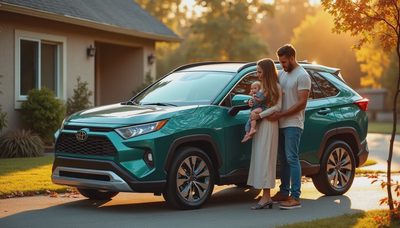
When my wife and I were looking for a used SUV for our two kids, we filtered by safety ratings first. We ended up with a 2019 Honda CR-V that earned Top Safety Pick+. That gave us peace of mind knowing the car was engineered to protect our kids in real-world crashes. The ratings also helped us avoid a few models that looked great on the lot but scored poorly in the small overlap test.
How to Check Ratings When Shopping
Before you even step foot on a dealer lot, spend 10 minutes on the IIHS website. Look up the specific model year you're considering. Ratings can change from year to year because manufacturers improve designs. For example, the 2017 Honda Pilot got a Good in the driver-side small overlap, but the passenger side was only Acceptable. The 2019 model fixed that. So don't assume all years are the same.
Also check the National Highway Traffic Safety Administration (NHTSA) stars. NHTSA uses a 5-star scale for frontal, side, and rollover protection. I recommend using both systems: IIHS for crashworthiness and front crash prevention, NHTSA for rollover risk. A car with 5 stars from NHTSA and Good ratings from IIHS is about as safe as you can get.

A Few Models That Score Well
If you want a starting point, look at Honda Accord, Toyota Camry, Mazda CX-5, Subaru Outback, and Toyota Highlander. These models consistently earn high highway institute safety ratings. But remember to check the exact year you're buying.
One thing I always tell people: don't skip the front crash prevention check. The IIHS tests automatic braking systems. A car with Superior rating can avoid a crash at 12 mph and 25 mph. That's real money saved on deductibles and repair bills.
Quick Checklist for Using IIHS Ratings on the Lot
Next time you visit a dealership, bring this checklist along. First, verify the exact model year on the window sticker. Write down the VIN and cross-reference it on the IIHS website. Do not rely on the salesperson's memory — years vary. Second, check for the Top Safety Pick+ badge on the car itself, but confirm it online because older models may not carry the designation. Third, ask about the front crash prevention system. Does it include automatic braking? Test it in a safe area if possible. Fourth, review the small overlap ratings for both driver and passenger sides — many cars only improved the driver side first. Fifth, compare the NHTSA rollover rating. SUVs with a high center of gravity are more prone to rollover, so a 4-star or better is ideal.
You can print the IIHS ratings page for the specific car and keep it in your folder. When a salesman says "this is a safe car," you can point to the Good ratings across all tests. That makes the decision data-driven instead of emotional.
The Bottom Line on Highway Institute Safety Ratings
Buying a used car is full of stories – "one owner, highway miles, never in an accident." But highway institute safety ratings cut through the noise with hard data. Make them part of your checklist. Look up the ratings, print them out, and take them to the lot. If a salesman tells you a car is safe but the IIHS says it's Marginal, you know who to believe.
Trust the test, not the talk. Your family's safety is worth the 10 minutes of research.


No letters yet — pray write the first.