
Let's keep this practical.
Some features feel brilliant during a 20-minute test drive. Then you hit 60,000 miles, the factory warranty is a memory, and those same features start generating repair quotes that make you wince. I've spent enough weekends in my garage and heard enough stories from other DIY owners to know which ones age gracefully and which ones don't.
Here's what I'd warn my own brother to avoid—or at least budget for—if he planned to keep a family SUV past the warranty window.
Panoramic Sunroofs: Beautiful Until They Aren't

A panoramic sunroof transforms the cabin. Light floods in. The kids love looking at clouds. On the showroom floor, it's an easy upsell.
After 60,000 miles, the story changes. Drain tubes clog with debris—pollen, leaf particles, road grit—and water finds the path of least resistance. Usually that means your headliner, your carpet, or the spare tire well where you won't notice the mold until the smell gives it away. The drains are narrow, often routed through body cavities that are difficult to access without disassembling interior trim.
When the mechanism fails, the repair is rarely just a single part. Sunroof tracks, seals, and motor assemblies often come as expensive sub-assemblies. Independent shops quote 800to800to1,500 for sunroof repairs that require headliner removal. If the glass itself cracks from a stone chip—less common than windshields but far more expensive—you're looking at significantly more.
The honest truth: most families I talk to say they used the panoramic roof regularly for the first six months and then mostly forgot about it. The shade stays closed in summer to keep the cabin cool. In winter, it stays closed because it's winter. For a feature that's expensive upfront, adds weight, and introduces multiple failure points, this one tops my list of things to skip if you're buying for the long haul.
On paper, this looks better than it feels in family use. Five years in, most parents would trade that glass roof for a lower purchase price and fewer repair worries.
Large-Diameter Wheels With Low-Profile Tires
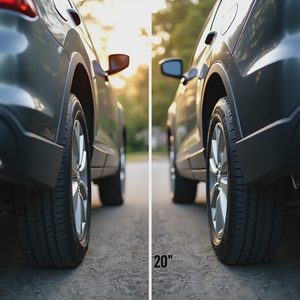
Those 19-inch or 20-inch wheels look sharp on the spec sheet and even sharper on the dealer lot. The lower-profile tires communicate road texture in a way that feels sporty during a test drive.
Then you live with them. Low-profile tires have shorter, stiffer sidewalls, which means every pothole, expansion joint, and crumbling asphalt edge transmits directly into the cabin. Your passengers feel it. Your suspension components feel it too—shorter sidewalls mean less impact absorption before force reaches the struts, ball joints, and control arm bushings.
The real pain hits at tire replacement time. A set of 235/55R19 tires—a common compact SUV size—runs roughly $200-300 more per set than the 225/65R17 equivalent on the base trim version of the same vehicle. Over a decade of ownership, that's two or three sets of tires worth of difference. Some 20-inch fitments push replacement costs even higher and limit your brand options to more expensive tire lines.
Smaller wheels with taller sidewalls ride better, protect suspension components, and cost less to replace. That's three wins and zero losses for a family vehicle. If the SUV you're considering offers a trim with 17-inch or 18-inch wheels, take it. Your back and your wallet will thank you.
Turbocharged Engines: The Long-Term Math
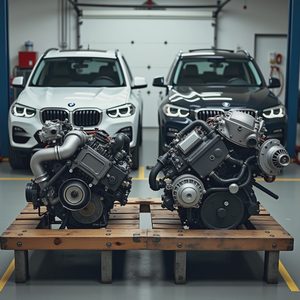
Turbochargers have become nearly unavoidable in the family SUV segment. Automakers love them—they extract more power from smaller, lighter engines and help meet fuel economy standards on paper. For a three-year lease, a turbocharged engine is a complete non-issue.
For the family that buys and holds, the long-term equation shifts. Turbochargers operate under extreme heat and rotational speeds that can exceed 150,000 rpm. The oil that lubricates the turbo's bearings is the same oil circulating through your engine. If oil changes are delayed, if the oil level drops between changes, or if the engine is shut off immediately after sustained highway driving without a brief cooldown period, turbo bearing life shortens measurably.
When a turbocharger fails, the repair regularly lands between 1500 and 3,500 depending on the vehicle and whether debris has migrated downstream into the intercooler and intake system. That's not a routine maintenance line item—that's a major unplanned expense.
Naturally aspirated engines run cooler, operate with lower internal stress, and avoid the turbocharger failure mode entirely. The tradeoff is less low-end torque and fewer highway passing bursts without downshifting. For a vehicle hauling children and groceries, that's a tradeoff I'd accept without hesitation.
If you plan to keep this SUV past the warranty window, pay attention to whether the base engine is turbocharged or naturally aspirated. The CR-V's hybrid system largely sidesteps this concern by using a naturally aspirated Atkinson-cycle engine. The RAV4 Hybrid does the same. Several competing models rely on small-displacement turbocharged engines that work hard and run hot. The spec sheet won't warn you about this. Your repair history will.
Touch-Sensitive Interior Controls
Automakers have been replacing physical buttons and knobs with touch-sensitive panels and haptic-feedback surfaces. The showroom pitch is about modernity and clean design. The reality after years of daily use is different.
Touch panels accumulate fingerprints, glare in certain light, and require the driver to look away from the road to operate. But the long-term problem is reliability. Physical buttons and rotary knobs are mature technology with straightforward failure modes. A volume knob that stops working is typically a $50–150 fix. A touch-sensitive climate control panel that fails often means replacing an entire integrated control module—a $500-1,200 repair before labor.
The HVAC controls are the worst offender here. With physical controls, you adjust temperature and fan speed by feel while keeping your eyes on the road. Touch-sensitive sliders demand visual attention. They also don't work well with gloves in winter—a practical consideration for families in northern states that no spec sheet mentions.
When you're on the test drive, try operating every control without looking at it. If you can't, the vehicle has a usability problem that becomes a safety and cost problem over time. The family SUV segment is trending away from this mistake—Mazda and Honda have been particularly vocal about retaining physical controls—but some models still push touch panels as a premium feature. It's not premium. It's a cost-cutting design decision dressed as technology.
Complex All-Wheel-Drive Systems
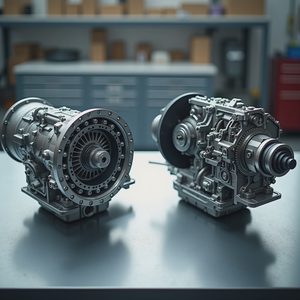
All-wheel drive is genuinely useful for families in snowy climates. The basic systems found in mainstream family SUVs are typically reliable and unobtrusive. The problem comes with the premium, performance-oriented systems marketed under brand-specific names with torque-vectoring rear differentials and multi-plate clutch packs that proactively distribute power.
These systems work beautifully. They genuinely improve traction and handling. But they add complexity at the rear axle, and that complexity eventually requires service. Differential fluid changes for these systems often require specialized fluids at higher cost. If a torque-vectoring rear differential fails outside warranty, the repair bill easily clears $2,500.
The simpler all-wheel-drive systems—the kind that primarily drive the front wheels and reactively send power rearward when slip is detected—have fewer moving parts under stress and lower long-term service costs. For the family driving on plowed roads, graded gravel, and the occasional ski trip, the basic system does everything needed without the future repair exposure.
What I Actually Recommend
None of these features are inherently bad. A panoramic sunroof is wonderful on a spring afternoon. Big wheels look great in the driveway. But every feature carries a long-term cost that has nothing to do with its showroom appeal and everything to do with how it's engineered to age.
If you're buying a family SUV you plan to keep well past 60,000 miles, the financially smarter path is to prioritize simpler powertrains, smaller wheels, physical controls, and basic all-wheel-drive hardware. The vehicle won't feel quite as flashy during the first year. It'll feel a lot better when the odometer crosses six figures and your repair fund is still intact.
That's the tradeoff: first-year excitement versus decade-long satisfaction. For a family budget, I'll take the satisfaction every time.
No letters yet — pray write the first.