Let's keep this practical.
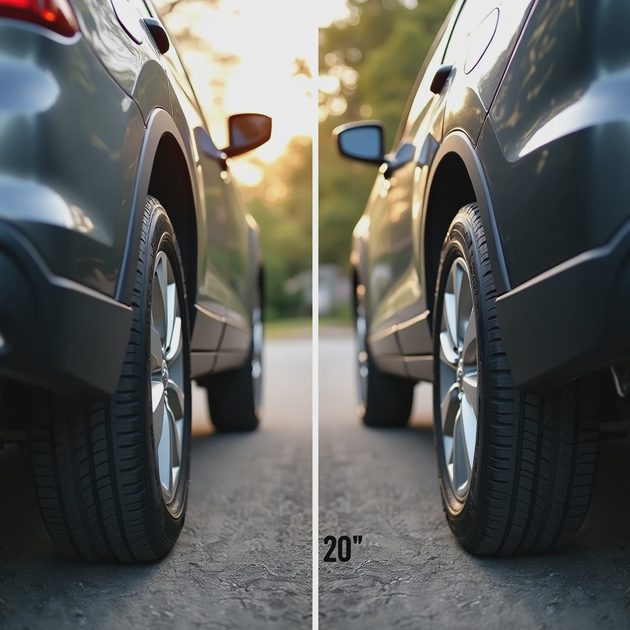
Wheel size is one of those things that seems purely cosmetic. Bigger wheels look better. They fill out the wheel wells. They give the vehicle a planted, confident stance on the showroom floor. Automakers know this, so they put 19-inch and 20-inch wheels on higher trims and charge a premium for them. Buyers happily pay it.
But wheel size quietly shapes your ownership costs in ways that compound for as long as you own the vehicle. Tire replacements cost more. Ride quality degrades. Suspension components wear faster. Fuel economy drops slightly. None of these costs appear on the window sticker. All of them show up in your bank account.
I've run the numbers on what different wheel sizes actually cost over a typical ownership window. The gap between 17-inch wheels and 20-inch wheels isn't small—and the benefits of the bigger wheels are mostly visual. Here's what the spec sheet won't tell you about living with large-diameter wheels long term.
The Tire Replacement Cost Gap
This is the biggest and most straightforward cost difference, and it's the one most buyers never calculate before signing.
A set of 225/65R17 tires—a common size on base trims of compact SUVs like the Honda CR-V, Toyota RAV4, and Subaru Forester—costs roughly $550 to $750 for a full set of quality all-season tires from a reputable brand. A set of 235/55R19 tires, the upgrade size on many of the same vehicles, runs roughly $800 to $1,100 for a comparable set. The 20-inch fitments found on top trims and sportier models push replacement costs higher still—often $1,100 to $1,500 per set.
Over a decade of ownership and roughly three sets of tires, the difference between 17-inch and 19-inch wheels adds up to roughly $750 to $1,200 in additional tire costs. Bump that to 20-inch wheels, and the decade-long tire premium can exceed $1,500. For an expense most buyers don't factor into the purchase decision, that's real money.
The tire industry's shift toward larger diameters has also reduced the availability of budget-friendly options in bigger sizes. When you need 20-inch tires, your choices skew toward premium brands and higher price points. When you need 17-inch tires, the market is flooded with competitive options at every price point.
If you plan to keep this SUV past the warranty window, pay attention to what those big wheels will cost you every 40,000 to 50,000 miles. The spec sheet is only half the story. The tire shop has the rest.
Ride Quality: What You Feel Every Single Day
Larger wheels require lower-profile tires to maintain the same overall tire diameter. A 17-inch wheel might wear a tire with a 65-series sidewall—meaning the sidewall height is 65% of the tread width. A 19-inch wheel on the same vehicle might run a 55-series tire. A 20-inch wheel might drop to a 45-series.
That shrinking sidewall number has a direct physical consequence. The shorter the sidewall, the less rubber there is between the wheel and the road. Less rubber means less impact absorption. Potholes, expansion joints, cracked pavement, and speed bumps transmit more force into the cabin—and into your suspension components.
On the test drive, the larger wheels feel sportier. The steering feels sharper because there's less sidewall flex. The vehicle responds more immediately to inputs. On a smooth road, it's genuinely pleasant. On the roads most families actually drive—the ones with winter pothole patches, crumbling asphalt edges, and the speed bump at the school entrance—the larger wheels deliver a harsher, busier ride that passengers notice.
For a family vehicle carrying children who may be napping, eating snacks, or prone to carsickness, ride quality isn't a luxury metric. It's a daily quality-of-life factor. Smaller wheels with taller sidewalls ride more comfortably, full stop. The tradeoff is slightly less precise steering response—a tradeoff that matters on a racetrack and barely registers in the school pickup line.
Suspension Wear: The Hidden Long-Term Cost
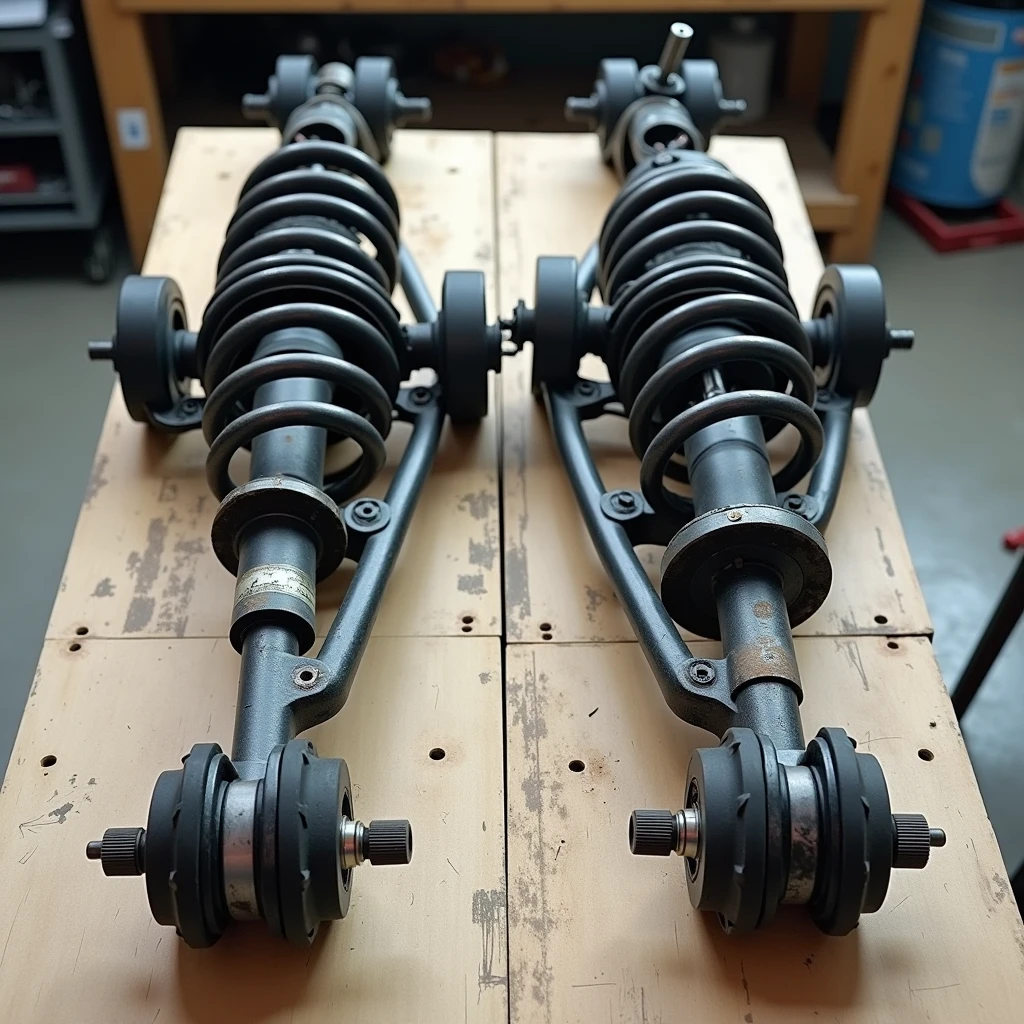
This is where the wheel-size cost equation gets less visible but more expensive. Low-profile tires absorb less impact energy, which means more of that energy travels into the suspension system. Struts, shocks, ball joints, control arm bushings, and sway bar links all work harder over the same roads when the tires are doing less of the cushioning.
The difference in suspension wear rates between a vehicle on 17-inch wheels and one on 20-inch wheels is difficult to isolate precisely—too many variables in driving conditions, road quality, and maintenance habits. But the physics are straightforward. More impact force reaching the suspension means more wear over time. Independent mechanics I've spoken with consistently report seeing earlier suspension component replacements on vehicles equipped with large-diameter wheel and tire packages, particularly in regions with rough roads and freeze-thaw cycles.
A single strut replacement on a typical family SUV costs $400 to $800 at an independent shop. Control arm bushings run $300 to $600 per side. These aren't routine maintenance items—they're repairs that catch owners off guard, often arriving earlier than expected on vehicles with large wheels that have spent years absorbing pothole impacts through short sidewalls.
The cost is hard to forecast precisely, but the pattern is consistent. Bigger wheels transfer more stress to suspension components. Suspension components wear. Repairs cost money. Over an eight-year ownership window in a region with real winters and deteriorating roads, the suspension wear premium for large-diameter wheels could reasonably run several hundred to over a thousand dollars compared to the base wheel size.
Fuel Economy: Small Difference, Long-Term Penalty
Larger wheels are almost always heavier than smaller ones. A 19-inch wheel and tire assembly can weigh 5 to 8 pounds more per corner than the 17-inch equivalent. That's 20 to 32 pounds of additional rotating mass that the engine must accelerate every time the vehicle moves from a stop. It's also unsprung weight—mass that the suspension must control over bumps, which further contributes to the ride quality and suspension wear issues.
The EPA fuel economy ratings don't always capture this difference because vehicles are often tested with their most popular configurations, not across every wheel size. But real-world data consistently shows a 1 to 2 mpg penalty for larger wheel packages in mixed driving. One mpg doesn't sound like much, but over five years and 60,000 miles, at $3.50 per gallon, a 1-mpg penalty costs roughly $370. Over a decade, it's $740. Add that to the tire cost premium and the potential suspension wear, and the financial picture darkens.
What I Actually Recommend
Wheel size is not a make-or-break financial decision on its own. The difference between 17-inch and 19-inch wheels over an extended ownership window is measurable but not catastrophic—probably 1500 to 2,500 in combined tire, ride quality, suspension wear, and fuel economy penalties over a decade. For some families, that's a reasonable price to pay for a vehicle that looks the way they want it to look.
What I'd caution against is treating wheel size as a free cosmetic upgrade. It isn't free. The costs are deferred, spread across years of tire replacements and suspension repairs, but they're real. If you're choosing between trims and the only meaningful difference is wheel size, the smaller wheels are the financially smarter choice every time.
If you live where roads are smooth and you lease for three years, wheel size barely matters. You'll replace tires once at most, and the suspension wear won't surface before you turn in the keys. If you buy and hold for eight years or more in a region with real winters, choose the smallest wheel size available on the trim that has the safety and comfort features you want. Your spine and your wallet will both notice the difference.
On paper, the big wheels look great. In family use, over years of ownership, the smaller wheels make more sense. That's not an exciting opinion, but it's an honest one—and it's kept more money in more family budgets than any wheel style ever has.

No letters yet — pray write the first.