Let's keep this practical.
The engine choice used to be simple. Most family SUVs came with a naturally aspirated four-cylinder or V6, and you picked based on fuel economy and whether you wanted to pay for the bigger motor. Now turbochargers are everywhere—bolted to small-displacement engines in compact SUVs, mid-size three-rows, and even hybrids. Automakers love them. They extract more power from smaller engines, post better EPA numbers on paper, and let marketing departments use words like "responsive" and "effortless."
But you're the one who owns the vehicle after the warranty expires. And from where I stand—with grease on my hands and a repair history spreadsheet that doesn't lie—the turbo versus naturally aspirated decision deserves a harder look than most buyers give it. Here's what the spec sheet won't tell you about living with each one long term.
How They Actually Work: The Difference That Matters
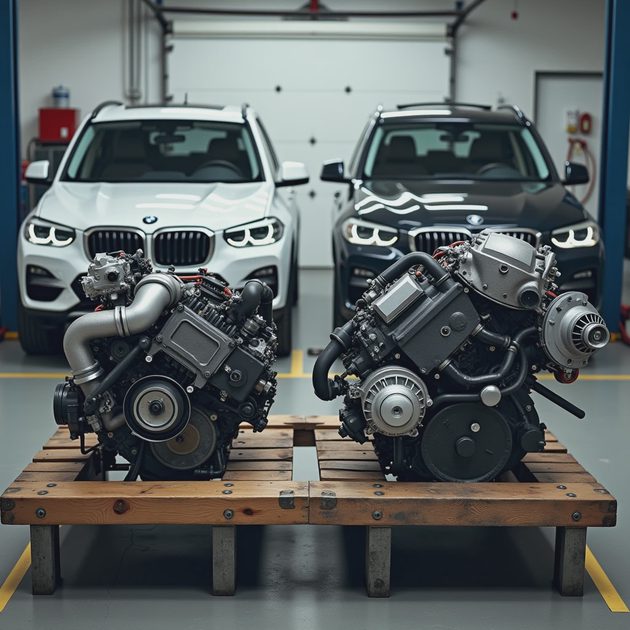
A naturally aspirated engine draws air in at atmospheric pressure. The pistons move down, create a vacuum, and air rushes in through the intake valves. That's it. The system operates at predictable temperatures, predictable pressures, and predictable stress levels. Engineers have been refining this design for over a century. The failure modes are well understood, and independent mechanics have seen them all.
A turbocharged engine forces compressed air into the cylinders using an exhaust-driven turbine. That turbine spins at speeds that can exceed 150,000 rpm. The compressed air is hotter, so the engine needs an intercooler to bring temperatures down before the air enters the combustion chamber. Combustion pressures are higher. Exhaust temperatures are higher. The oil that lubricates the turbo bearings is the same oil circulating through the engine, which means it's subjected to extreme heat and shear forces that don't exist in a naturally aspirated design.
On paper, the turbocharged engine delivers more power from less displacement and uses less fuel while cruising. In daily family use, the differences are more nuanced—and they tend to surface after the warranty clock runs out. The spec sheet is only half the story. The other half is what happens in your garage at year six, year seven, year eight.
The Real-World Ownership Differences
Here's where the two paths genuinely diverge for the family buyer planning to keep a vehicle long term.
Oil change discipline matters more with turbocharged engines.
Every engine needs regular oil changes. But a turbocharged engine is far less forgiving of neglect. The turbocharger's bearings rely on a steady supply of clean, full-synthetic oil at the correct level. If oil changes are delayed, if the oil level drops between changes, or if the wrong viscosity is used, turbo bearing life shortens measurably. I've seen turbos fail before 80,000 miles in engines that were otherwise healthy, and the common thread was extended oil change intervals or low oil levels.
Naturally aspirated engines still need regular oil changes, but they tolerate occasional lapses without catastrophic consequences. The oil isn't subjected to turbocharger-level heat, so it degrades more slowly. For the family buyer who sometimes lets maintenance slide by a few hundred miles because life gets busy, the naturally aspirated engine provides a wider margin of error.
Fuel economy on paper versus fuel economy in real life.
Turbocharged engines earn their EPA ratings under gentle driving conditions—the kind where the turbo isn't spooling up frequently. In real family driving, with loaded cargo areas, highway merges, and the occasional enthusiastic throttle application, turbocharged engines can consume fuel at rates closer to larger naturally aspirated engines. The EPA numbers look better on the window sticker, but your actual pump costs may not match the advertised advantage.
Naturally aspirated engines deliver more consistent real-world fuel economy. Their efficiency doesn't swing as dramatically based on driving style. If you have a heavy right foot, a turbocharged engine will punish your fuel budget more than a naturally aspirated equivalent.
Repair costs when things go wrong.
When a turbocharger fails, the repair bill lands somewhere between 1500 and 3,500 depending on the vehicle and whether debris has migrated into the intercooler or intake system. That's a major unplanned expense, not a routine maintenance item. Some turbochargers are integrated into the exhaust manifold, which means the entire assembly must be replaced as a unit—no repairing just the failed component.
Naturally aspirated engines have their own failure modes, but they're generally less expensive to address. A failed timing chain, a worn water pump, a leaking valve cover gasket—these are known quantities with predictable repair costs. Most independent shops can handle them without specialized equipment or factory-specific diagnostic tools.
Which SUVs on the Market Get This Right

Some family SUVs have embraced turbocharging across the board. Others have held onto naturally aspirated options or found hybrid workarounds that sidestep the turbo question entirely. Here's how the current market breaks down.
The all-in on turbocharging group includes the Mazda CX-5 and CX-50, which use a turbocharged 2.5-liter on higher trims. The Chevrolet Equinox and GMC Terrain now use turbocharged engines across the lineup. These vehicles deliver strong acceleration numbers and competitive EPA ratings, but they ask more of their owners in terms of maintenance discipline. If you lease and trade every three years, none of this matters. If you buy and hold, it does.
The naturally aspirated holdouts include the Toyota RAV4 and Highlander in their non-hybrid V6 or four-cylinder forms, the Honda Pilot with its naturally aspirated V6, and the Subaru Forester and Ascent with naturally aspirated flat-four engines. These vehicles sacrifice some low-end torque and on-paper horsepower for long-term mechanical simplicity. Their maintenance schedules are predictable, and their repair histories are well documented.
The hybrid sidestep might be the smartest play of all. Vehicles like the Honda CR-V Hybrid, Toyota RAV4 Hybrid, Hyundai Tucson Hybrid, and Kia Sportage Hybrid use naturally aspirated Atkinson-cycle engines paired with electric motors. The electric motor provides the low-end torque that a turbocharger would otherwise supply, while the gasoline engine operates in a relatively unstressed efficiency-focused cycle. These hybrid systems avoid turbo complexity entirely while delivering the responsive low-speed acceleration that families appreciate in daily driving. The long-term reliability data on these systems is strong—Toyota's hybrid architecture has been on the road for over two decades, and Honda's system is building a similar track record.
The Long-Term Cost Spreadsheet
Let's put numbers to the decision. Over an eight-year ownership window with 12,000 miles driven annually, here's what the turbo versus naturally aspirated choice roughly translates to.
Fuel costs:A turbocharged compact SUV averaging 28 mpg combined will consume about 3,429 gallons over eight years. At $3.50 per gallon, that's roughly $12,000. A hybrid with a naturally aspirated engine averaging 36 mpg combined will consume about 2,667 gallons—roughly $9,335. That's a $2,665 fuel savings for the hybrid over eight years. The turbocharged engine may post similar EPA highway numbers, but real-world driving tends to widen the gap.
Maintenance costs: The turbocharged engine will likely require more frequent oil changes with full-synthetic oil, and the turbocharger itself may need replacement or rebuild between 100,000 and 150,000 miles if you keep the vehicle that long. Budget 1,500to1,500to3,000 for a turbocharger replacement in the out years. The naturally aspirated engine will have its own maintenance needs—timing belt or chain service, spark plugs, fluid changes—but avoids the turbocharger line item entirely.
The hybrid sweet spot: The hybrid with a naturally aspirated engine captures the fuel economy advantage without the turbocharger's long-term cost exposure. The hybrid battery is a potential replacement item after 150,000 to 200,000 miles, but Toyota's 10-year/150,000-mile hybrid battery warranty provides meaningful coverage for long-term owners. Honda's coverage is shorter at 8 years/100,000 miles but still spans most of a typical ownership window.
If you plan to keep this SUV past the warranty window, pay attention to which engine architecture you're buying. The turbocharged engine will feel stronger during the test drive. The naturally aspirated engine will feel more predictable in the repair bay.
My Honest Take for Family Buyers
For the family that leases and trades every three years, the turbo versus naturally aspirated question barely matters. You'll be out of the vehicle before the long-term cost differences surface. Buy whichever engine delivers the driving experience and EPA numbers you prefer.
For the family that buys and holds for eight years or more, I lean toward naturally aspirated engines and hybrid systems that avoid turbocharger complexity. The maintenance margins are wider, the repair costs are more predictable, and the real-world fuel economy gap is smaller than the window stickers suggest. The hybrid powertrains from Toyota, Honda, Hyundai, and Kia deliver the torque and responsiveness families want without the turbocharger's long-term tradeoffs.
That said, turbocharged engines aren't inherently unreliable. Modern turbochargers are vastly improved over the units that earned the technology a bad reputation in the 1980s and 1990s. With disciplined maintenance—on-time oil changes with the correct full-synthetic oil, allowing a brief cooldown after sustained highway driving, and addressing oil leaks immediately—a modern turbocharged engine can deliver reliable service well past 100,000 miles. The question is whether you want to be that disciplined, or whether you'd prefer an engine that forgives the occasional missed maintenance interval.
For most family buyers I talk to, the answer leans naturally aspirated—or better yet, naturally aspirated with an electric motor doing the heavy lifting from a standstill. That's where the smart long-term money sits in 2026.

No letters yet — pray write the first.