Let's keep this practical.
Walk through any suburban neighborhood on a weekday evening and count the SUVs in the driveways. Now count how many of those vehicles have ever towed anything, carried more than five passengers, or driven on a surface more demanding than a gravel parking lot. The gap between what we buy and what we actually need is wide—and it costs families real money.
I'm not here to judge. I'm here to do the math. Because the SUV industry has spent decades convincing parents that bigger is safer, more capable, and more responsible. The numbers tell a different story. Let's walk through why most families buy more SUV than they need, what that decision actually costs, and how to get it right next time.
The Fear That's Driving Your Decision
Most SUV purchases start with fear disguised as practicality. We worry about snowstorms that happen twice a year. We imagine road trips with extended family that might happen once every eighteen months. We picture worst-case cargo scenarios that our daily lives almost never produce.
Automakers know this. Their marketing shows vehicles splashing through muddy trails, conquering mountain passes, and carrying adventure gear on roof racks. But the actual vehicle they're selling will spend 99% of its life on paved roads, commuting to work, and sitting in school pickup lines. That's not cynicism—that's American driving data.
The fear-driven purchase usually sounds something like this: "I need three rows in case we carpool" or "I need all-wheel drive for the winter" or "I need a V6 for merging on the highway." Each of those sentences tacks roughly 3,000to3,000to8,000 onto the purchase price—and the first two add ongoing fuel and maintenance costs that compound for as long as you own the vehicle.
Ask yourself this: when was the last time your current vehicle genuinely couldn't do something your family needed? If the answer is "rarely" or "never," the upgrade urge might be coming from marketing, not reality.
The spec sheet is only half the story. The other half is the quiet voice that says "this might happen someday." That voice has cost families more money than any dealer markup ever could.
Third Rows Sound Useful Until You Sit in Them
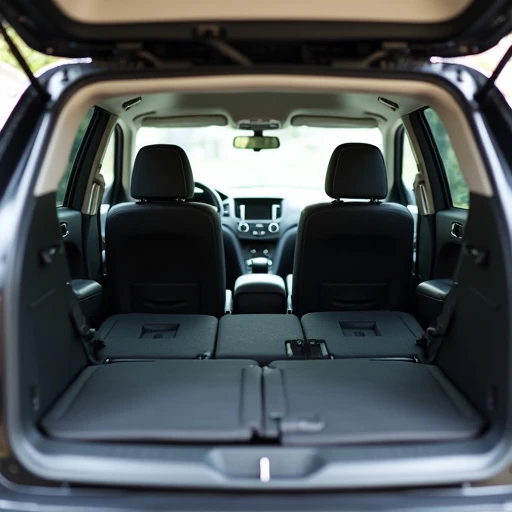
The three-row SUV is the poster child for overbuying. On paper, it solves a problem: what if I need to carry more people? In practice, the third row in most midsize SUVs is a compromise that rarely justifies its cost.
The typical midsize three-row SUV offers roughly 28 to 32 inches of third-row legroom. For reference, a compact car's rear seat usually has 34 to 36 inches. An adult sitting in a midsize SUV's third row sits knees-up, head against the ceiling or rear glass, with limited visibility and no easy exit path. Children outgrow that space by middle school.
When the third row is up, cargo space shrinks dramatically—often to less than 20 cubic feet behind the third row. That's school-backpack territory, not "family of five on a weeklong trip" territory. Many midsize three-row owners report keeping the third row folded 95% of the time, effectively using their vehicle as a two-row SUV with worse fuel economy and a higher purchase price than the two-row equivalent.
The practical truth: if your household has three or more kids and you regularly carry extra passengers, a three-row SUV can make sense. But the math only works if those rows are actually occupied on a weekly basis. If you're using the third row for Thanksgiving and the occasional soccer carpool, you're paying a significant premium for capacity you access six times a year. A two-row SUV plus the occasional rental or second vehicle often costs less over five years than a three-row you don't fully use.
Third rows sound useful until you sit in them. By then, the contract is already signed.
Horsepower Is Usually the Wrong Number for Family Drivers
Somewhere along the way, horsepower became the number everyone checks first. Zero-to-60 times get compared. Engine output gets debated. The assumption is that more power equals more safety, more confidence, more capability.
For a family SUV carrying children, school gear, and groceries, that assumption falls apart under scrutiny. A modern naturally aspirated four-cylinder engine making 180 to 200 horsepower is more than adequate for merging, passing, and highway cruising—even with a full load of passengers. The vehicles that feel "underpowered" are often those with poorly tuned transmissions or turbocharged engines that need to spool up before delivering torque, not those lacking raw horsepower.
What more horsepower actually delivers is worse fuel economy, higher insurance premiums, and often a more expensive engine architecture that costs more to maintain long-term. The V6 that feels effortless during a test drive will consume more fuel every single day—including the 90% of driving where you're not asking for anything close to maximum output.
Here's what I tell friends who ask about engine choices: drive the base engine first. Load the vehicle with your family and do a real highway merge. If it genuinely feels unsafe or unpleasant, consider the upgrade. But go in assuming the base engine will be sufficient, because for the overwhelming majority of family driving, it absolutely is.
If the spec sheet is only half the story, the horsepower number is barely the first paragraph. Torque delivery, transmission behavior, and how the engine feels between 2,000 and 4,000 rpm matter far more for daily driving than peak output. No one drives at peak output with a sleeping toddler in the back.
All-Wheel Drive: Worth It Where It Snows, Wasted Everywhere Else
All-wheel drive has become near-mandatory in the family SUV conversation. Buyers in states with mild winters pay for it anyway, treating it as insurance against bad weather that rarely arrives.
The cost is real and multilayered. AWD typically adds $1,500 to $2,500 to the purchase price. It reduces fuel economy by 1 to 3 mpg, which compounds over every tank of fuel for the life of the vehicle. It adds weight and mechanical complexity. Tires must be replaced in sets of four rather than pairs, because uneven tread depth can damage AWD transfer cases. That means a single unrepairable flat tire can trigger a $600–800 replacement bill instead of a $150-200 pair replacement.
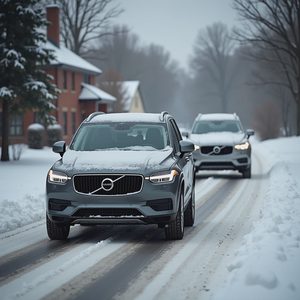
AWD provides genuine safety and traction benefits in snow, ice, and unpaved conditions. If you live where winter means regular accumulation, or your driveway is a quarter-mile of gravel, the cost is justified. But if your winter consists of a few light dustings and your vehicle never leaves pavement, front-wheel drive with a good set of all-season tires will handle 98% of what you encounter. Snow tires on a FWD vehicle will outperform all-season tires on AWD in winter conditions—and cost less over time.
The honest breakdown: AWD is a tool, not an upgrade. Buy it if you have a job for it to do. Skip it if you don't.
What Your Family Actually Needs
The SUV that fits most American families with one or two children is a compact or midsize two-row model with a four-cylinder engine, front-wheel drive, and a well-designed cargo area that handles strollers, groceries, and weekend luggage without drama. That vehicle will do everything asked of it for less money up front, less money at the pump, and less money in long-term maintenance.
Not everyone fits that profile. Families with three or more children, those in genuinely harsh winter climates, and those who regularly tow have legitimate reasons to step up. But those families are the minority. The majority are buying capability they'll never use because they're afraid of being caught without it.
Here's my practical test: before you shop, write down every single thing your current vehicle genuinely failed to do for your family in the past two years. Not what you worried it might fail to do—what it actually failed to do. If the list is short or empty, you have permission to buy less SUV. The money you save will fund a lot of family road trips in whatever you choose.

No letters yet — pray write the first.