Let's keep this practical.
The three-row SUV is the minivan for people who refuse to buy a minivan. It promises seating for seven or eight, cargo flexibility, and the quiet reassurance that you'll never have to say "sorry, we don't have room" when someone needs a ride. The sales pitch works. Three-row SUVs are among the best-selling vehicles in America, and every automaker has rushed to fill the segment with options from compact to full-size.
But here's what the brochure won't show you: a grown adult sitting in the way-back with their knees at chest height. A cargo area so small with the third row up that a single stroller won't fit. A second-row seat that requires a gymnastics routine to tumble forward for third-row access while a child seat is installed.
I've sat in every third row on the market. I've measured the legroom, headroom, and cargo depth behind them. And I've concluded that for most families shopping the midsize and compact three-row segment, the third row is a feature that sounds better on the test drive than it feels three years into ownership. Here's why.
The Numbers That Actually Describe a Third Row
Automakers publish third-row legroom figures that range from roughly 28 to 38 inches depending on the vehicle. Those numbers are measured with the second row slid forward—sometimes all the way forward—which isn't where you'll keep it if someone is sitting in the second row too.
In practice, a third row with less than 32 inches of legroom is a kids-only zone. At 30 inches, an average ten-year-old sits with knees touching the second-row seatback. At 28 inches, even younger children feel cramped, and the space works only for car seats or very short trips. For reference, a compact car's rear seat typically offers 34 to 36 inches of legroom. Most three-row SUVs are asking passengers to accept less space in the third row than they'd get in the back of a Honda Civic.
Headroom is the other number nobody checks until their skull touches the ceiling. Many three-row SUVs have a roofline that slopes downward toward the rear for styling or aerodynamics. That looks sleek on the outside. On the inside, it means the third-row passenger's head is closer to the rear glass than they'd like, and the seat cushion is mounted low to the floor to create headroom that wouldn't otherwise exist. The result is a seating position that's more crouch than sit—knees up, back straight, no thigh support.
The spec sheet is only half the story. Sit in the third row yourself before signing anything. If you can't comfortably spend 30 minutes back there, neither can your mother-in-law.
Cargo Space: The Tradeoff Nobody Explains Clearly
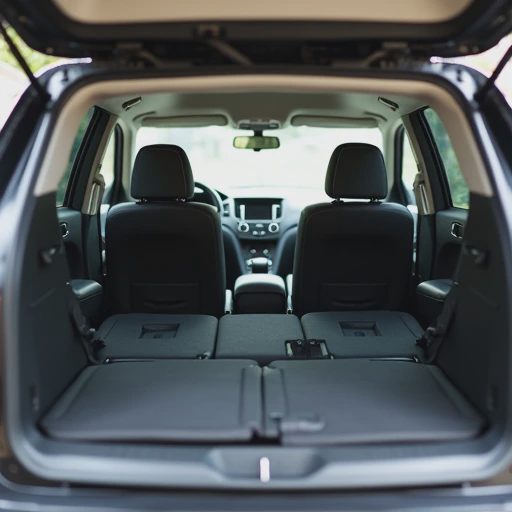
When the third row is up, cargo space behind it shrinks dramatically. This is the single most important thing to understand about three-row SUVs, and it's the one dealers are least likely to volunteer.
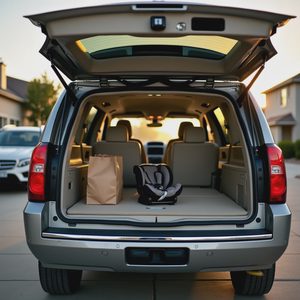
The typical compact three-row SUV—think Kia Sorento or Volkswagen Tiguan with the optional third row—offers roughly 12 to 15 cubic feet behind the third row. That's school-backpack territory. A full-size stroller will not fit without folding one of the third-row seats. A week's worth of groceries for a family of five requires stacking bags on laps. A family road trip with all seats occupied means a cargo box on the roof is no longer optional—it's mandatory.
Midsize three-row SUVs do better but still fall short of what families imagine. The Toyota Highlander offers about 16 cubic feet behind the third row. The Honda Pilot and Chevrolet Traverse lead the segment with 18 to 23 cubic feet, which is enough for a stroller and some bags but still far less than the cargo space behind the second row of a two-row SUV like the Honda CR-V or Hyundai Santa Fe.
The tradeoff is direct and unavoidable: every inch of vehicle length dedicated to a third row is an inch not dedicated to cargo space when that row is up. And when it's folded, you're carrying around seats you aren't using—seats that add weight, reduce fuel economy, and raised the purchase price by thousands of dollars.
If you plan to keep this SUV past the warranty window, pay attention to how often that third row is actually occupied. The answer for most families is less than 5% of driving time. That's a lot of compromise for a feature that's rarely used.
Access: The Daily Frustration Nobody Mentions in Reviews
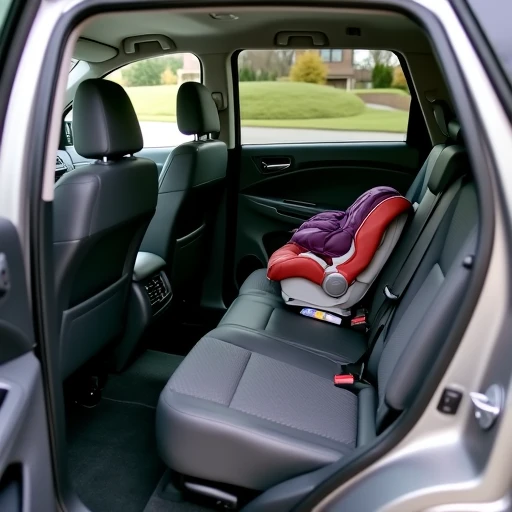
Third-row access is the part of ownership that wears on you day after day. The test drive feels manageable because you're doing it once, with no time pressure, in a clean vehicle with no child seats installed. Real life is different.
With a rear-facing child seat installed in the second row, that seat typically cannot tumble forward. The car seat stays put. Third-row access becomes a narrow gap between the folded second-row outboard seat and the door frame—a gap that a child can squeeze through but an adult helping to buckle a car seat cannot. Some vehicles offer a tilt-and-slide mechanism that moves the second row forward even with a child seat installed, but the resulting opening is still tight, and many models don't offer this at all.
In the school pickup line, when a kid needs to climb into the third row with a backpack, a lunchbox, and a winter coat, the process takes three times longer than it would with a two-row vehicle. In the rain, that time stretches further. With a sleeping toddler in the second row, you're not accessing the third row at all without waking them.
Minivans solve this with sliding doors and a flat floor. Three-row SUVs solve it with marketing photos that show the third row empty and the second row folded in ways that real families with car seats can rarely replicate. The honest truth: if you need to access the third row daily, buy a minivan. If you can't bring yourself to buy a minivan, accept that third-row access will be a recurring inconvenience and plan accordingly.
Who Actually Needs a Third Row
There are families for whom a three-row SUV makes genuine sense. They're just fewer than the sales numbers suggest.
You need a third row if you have three or more children in car seats or boosters and you carry them simultaneously on a daily or near-daily basis. You need a third row if you regularly transport additional family members—an aging parent, a niece or nephew, a carpool group—and the alternative is taking two vehicles. You need a third row if your household includes a combination of children and large dogs that require separate zones of the vehicle.
What doesn't justify a third row: the once-a-year Thanksgiving carpool, the hypothetical road trip with extended family that might happen someday, or the vague sense that you'll "grow into" the space. Renting a larger vehicle for the once-a-year trip costs less than the upfront premium and ongoing fuel penalty of a three-row SUV you don't fully use. The math on this is clear and has been for years.
If your household has two children or fewer and you don't regularly transport extra passengers, a two-row SUV or even a well-chosen sedan will serve your daily needs without the cargo compromise, the access frustration, or the purchase price premium that third rows inevitably bring.
What I'd Tell My Brother
Third rows sound useful. They test well in the showroom. They make families feel prepared for any scenario. But in daily life, they spend most of their time folded flat, taking up space and adding weight while delivering none of the flexibility the brochure promised.
Before you pay extra for a third row, do this: find a three-row SUV on a dealer lot. Slide the second row to a position where an average adult can sit comfortably. Then climb into the third row yourself and stay there for ten minutes. Bring your phone and see if you can actually use it with your knees in your chest. Then open the tailgate and look at how much cargo space remains behind you. Then imagine doing all of this in the rain, with a crying toddler, while a car seat blocks the second-row access path.
If after that exercise you still want the third row, buy a full-size SUV or a minivan—something designed around three rows from the start. If the exercise changes your mind, congratulations: you just saved several thousand dollars and a lot of daily frustration. Sometimes the most practical decision is the one that sounds less exciting in the brochure.


No letters yet — pray write the first.