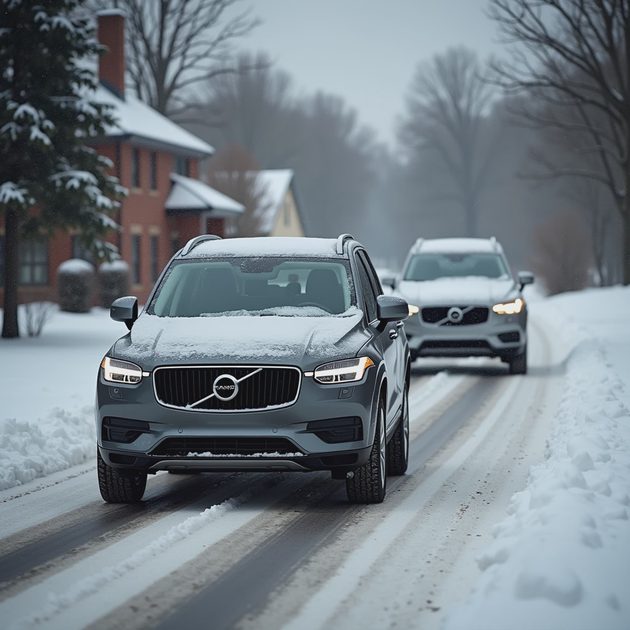
Let's keep this practical.
All-wheel drive has become the default checkbox on the family SUV shopping list. Walk onto any dealer lot and the FWD options are scarce—automakers build what sells, and AWD sells. Buyers treat it as cheap insurance against bad weather, a must-have for resale value, a non-negotiable for family safety.
But for millions of families, AWD is a feature they pay for twice—once at purchase and again every year through higher fuel consumption, more expensive tire replacements, and increased maintenance costs—without ever needing what it actually does. Here's an honest look at who actually needs AWD, who doesn't, and how much money you can save by sticking with front-wheel drive.
What All-Wheel Drive Actually Costs
The AWD premium starts on the window sticker and never stops. Let's walk through the actual numbers.
Purchase price:Most family SUVs charge $1,500 to $2,500 for the AWD option over an equivalent FWD model. On a Honda CR-V, adding AWD to the EX trim costs roughly $1,500. On a Toyota RAV4, about $1,400. On a larger vehicle like a Toyota Highlander, the premium pushes toward $2,000. That's real money before you've driven a single mile.
Fuel economy:AWD systems add weight—typically 150 to 250 pounds—and mechanical drag from the additional drivetrain components spinning even when the rear wheels aren't receiving power. The EPA fuel economy penalty is typically 1 to 3 mpg combined. A Honda CR-V drops from 30 mpg combined in FWD form to 29 mpg with AWD. A Toyota RAV4 Hybrid drops from 40 mpg to 39 mpg. One or two mpg doesn't sound like much, but over five years and 60,000 miles at $3.50 per gallon, a 2-mpg penalty costs roughly $420.
Tire replacements: Most AWD systems require replacing all four tires simultaneously if one is damaged beyond repair. A single unrepairable flat tire on an AWD vehicle can trigger a $600–$800 full-set replacement. On a FWD vehicle, you can replace just the pair on the same axle for $300–$400. Over a decade of ownership, the odds of an unrepairable flat are high enough that this difference should factor into the budget.
Maintenance: AWD systems require periodic fluid changes for the transfer case and rear differential—services that FWD vehicles don't need at all. These services typically run $150–$300 each and are recommended every 30,000 to 60,000 miles depending on the manufacturer. Over 100,000 miles, that's an extra $300–$600 in maintenance that a FWD owner never sees.
Total the AWD premium over five to eight years of ownership: roughly $1,500–$2,500 upfront, plus extra fuel costs, plus potential tire replacement penalties, plus differential fluid services. A conservative estimate lands around $2,500 to $3,500 over the ownership period. That's a family vacation. A set of braces. A semester of college savings.
The spec sheet is only half the story. The other half is the cumulative cost that shows up year after year on a vehicle that spent its entire life on pavement.
Where AWD Actually Matters
AWD provides genuine safety and traction benefits in specific conditions. I'm not arguing otherwise. What I'm arguing is that most families don't encounter those conditions often enough to justify the cost.
AWD helps in snow deeper than a couple of inches, on unplowed roads, and on steep grades with limited traction. It helps on unpaved surfaces—gravel driveways, dirt roads, muddy trailheads. It helps when accelerating from a stop on slick surfaces, where the additional driven wheels can find grip that the front wheels can't.
What AWD does not do is help you stop. It doesn't improve braking distances on snow or ice. It doesn't help you turn once you're already moving. These are tire functions, not drivetrain functions. A FWD vehicle with proper winter tires will out-brake and out-turn an AWD vehicle on all-season tires in winter conditions. The tire compound and tread pattern matter more for winter safety than which wheels receive engine power.
The regions where AWD genuinely earns its keep are limited: the upper Midwest, the Mountain West, New England, and anywhere with regular lake-effect snow. If you live in Minnesota, Michigan, upstate New York, or Colorado at elevation, AWD is a reasonable purchase. If you live in Virginia, Tennessee, Texas, or California outside the mountains, you're paying for capability you'll use once or twice a year—and those once-or-twice-a-year situations are better handled by staying home during the rare snowstorm than by paying an AWD premium for a decade.
On paper, AWD looks like cheap insurance. In family use, for most of the country, it's insurance against a scenario that rarely happens and can be mitigated by other means.
What Front-Wheel Drive With Good Tires Can Actually Do
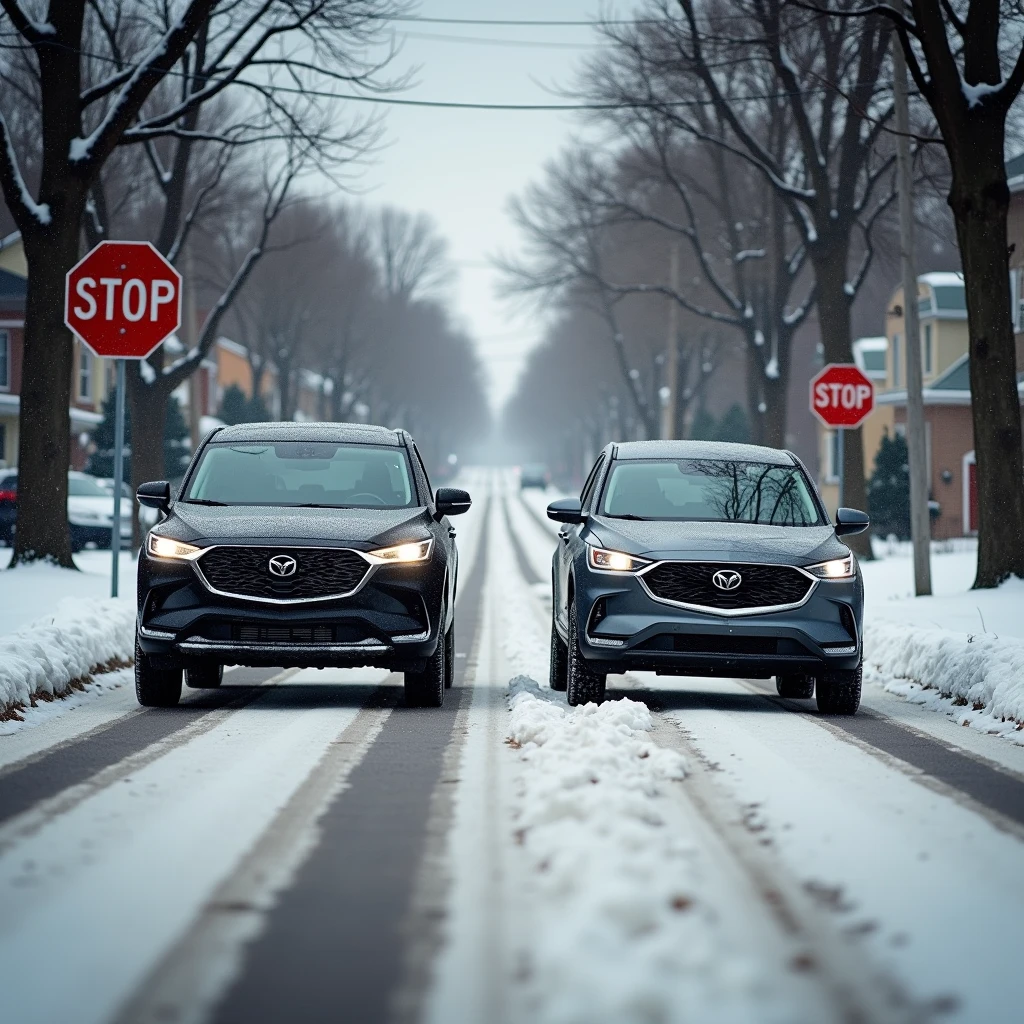
Modern front-wheel-drive vehicles with stability control, traction control, and good all-season or winter tires are far more capable than the AWD marketing machine wants you to believe.
The majority of a vehicle's braking and cornering traction comes from the tires, not the drivetrain. A FWD SUV with a set of winter tires will navigate a snowy commute with more confidence than an AWD SUV on the all-season tires it left the factory with. The winter tires provide more grip for acceleration, cornering, and—crucially—braking, which AWD does nothing to improve.
For the family driving on plowed roads, graded gravel, and the occasional ski trip, FWD with good tires does everything needed. The stability control systems on modern vehicles are sophisticated enough to manage traction at each wheel individually, even on a FWD platform. The mechanical limited-slip differentials and brake-based torque vectoring that some FWD vehicles offer further close the gap with basic AWD systems in low-traction situations.
If your winter driving consists of a few light dustings per year and your vehicle never leaves pavement, FWD with a quality set of all-season tires will handle 98% of what you encounter. For the other 2%, staying home or waiting for the plows is a legitimate strategy that costs nothing.
The honest truth: the biggest traction upgrade you can make to any family SUV is a set of dedicated winter tires, not AWD. Winter tires on a FWD vehicle cost roughly 600 to 900 for a set mounted on steel wheels. That's less than half the lifetime AWD premium, and they'll outperform an AWD vehicle on all-seasons in every winter safety metric that matters.
The Resale Value Argument
AWD advocates often point to resale value. AWD versions of popular SUVs do command higher resale prices than their FWD equivalents. The question is whether the higher resale value recovers the higher purchase price and ongoing costs.
In regions where AWD is genuinely valued—the snowbelt states—AWD models do recover much of their upfront premium at resale. A used CR-V with AWD in Minnesota will sell faster and for more money than a FWD equivalent. In the Sunbelt, the resale gap narrows considerably. A used CR-V in Texas or Florida sees little price difference between AWD and FWD, because the next buyer doesn't value the feature either.
If you live in a region where AWD is genuinely useful and the local used market values it accordingly, the resale math narrows the total cost gap. Over five years, a $1,500 AWD premium that returns $800 at resale has a true cost of $700, not $1,500. That's more palatable. But it's still a cost, and it excludes the fuel, tire, and maintenance premiums that accrue during ownership.
If you live in a mild climate and plan to sell your vehicle locally, the AWD premium at resale will be negligible, and the total cost of AWD ownership will be closer to the full upfront and ongoing expense. In that case, FWD is the clear financial winner.
If you plan to keep this SUV past the warranty window, the resale value argument matters less anyway. At year eight or ten, the condition, mileage, and maintenance history of a used vehicle drive its value far more than whether it has AWD. The AWD premium shrinks toward zero, but the fuel and maintenance costs you've already paid don't get refunded.
What I'd Tell My Brother
Unless you live where it snows regularly and the roads aren't reliably plowed, or you regularly drive on unpaved surfaces, you don't need all-wheel drive. Buy the front-wheel-drive version of the SUV you want, take the savings, and put a set of winter tires on it if you're worried about the occasional snow day.
The AWD option is not a safety feature. It's a traction feature that helps in specific conditions at a specific cost. Tires are the safety feature. Good tires on FWD stop shorter and turn more securely than worn all-seasons on AWD. If your budget is stretched and you're choosing between AWD and better tires, buy the better tires.
Here's the short version: AWD helps you go. Winter tires help you stop. For a family vehicle carrying children, stopping is what matters. If you remember nothing else from this article, remember that.
The SUV industry has spent decades convincing buyers that AWD is essential. It isn't. It's useful for some people in some places some of the time. For everyone else, it's an expense that doesn't pay for itself. Front-wheel drive with good tires is the practical choice for the majority of American families—and the savings will fund a lot of family road trips in whatever you buy.

No letters yet — pray write the first.